
Shooting the Grandest Super 8 Epic of All Time
Wolfgang Krone’s Battle
Photos: Karla Jacobi-Doil
200 actors, 100 costumes, 30 horses – Hanoverian Wolfgang Krone shot his monumental Super 8 work “The memories of grenadier Rousseau” from 1978 to 1984. Twenty years later, Krone became the subject of another film. Dutch director Bart van Esch created a portrait of the man who once captured numerous battles on small format film.
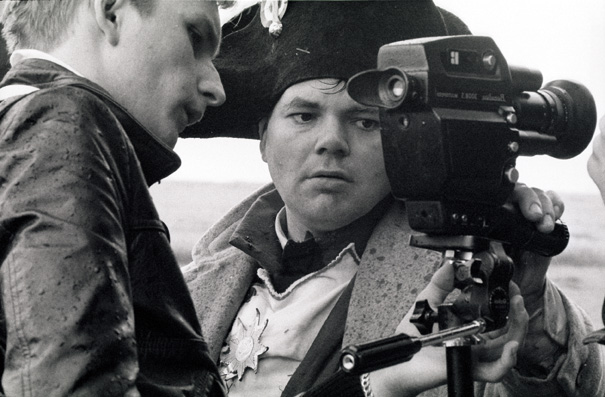
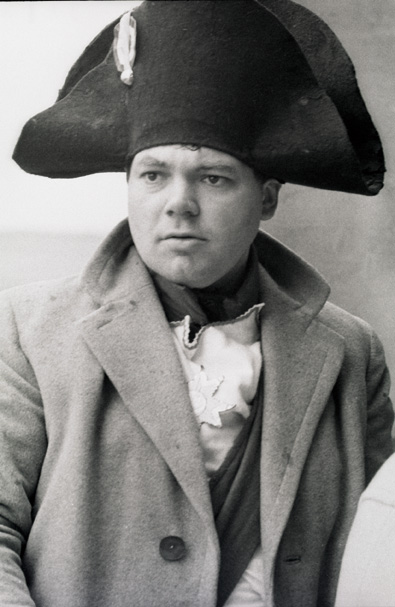
“I sit here in my one room flat with my Napoleon costume still in the cupboard, and I think back fondly on the time when it all came about,” recalls Krone, 69, during a conversation. He got his first Super 8 cine camera in 1977. As a result, he got to know a young man who enjoyed the same hobby. “Werner Pollack loved the Napoleonic era. At that time he was a trumpet player in the Hanover city guard and also filmed on Super 8.”
And so Krone, then 32, procured sabers and swords for a film that his 16-year-old friend wanted to shoot. With seven people, they reenacted the time in Pattensen when the Grande Armee returned from Russia. “However, this was during the winter, and our actors preferred to sit beside the stove,” remembers Krone. It was clear to him that the next film would take place in summer.
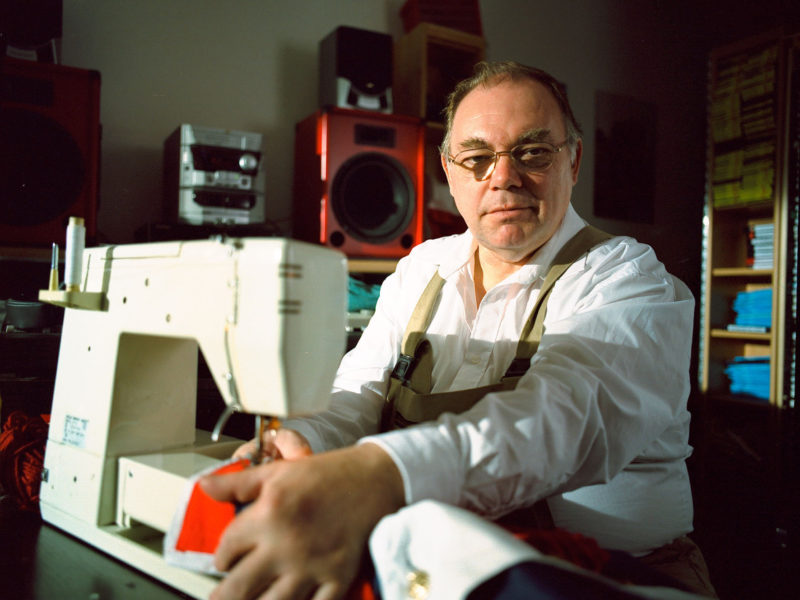
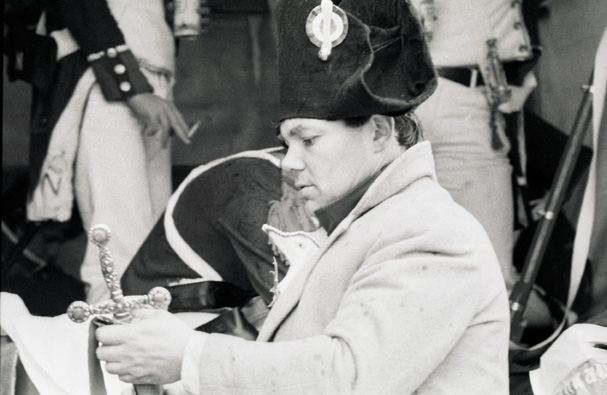
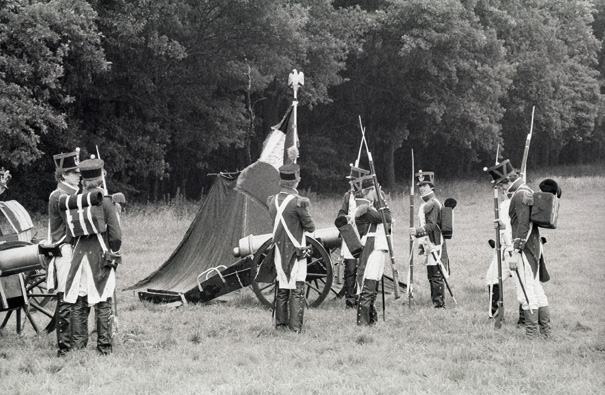
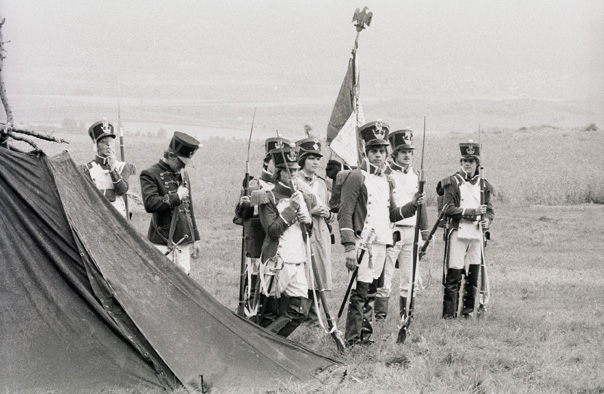
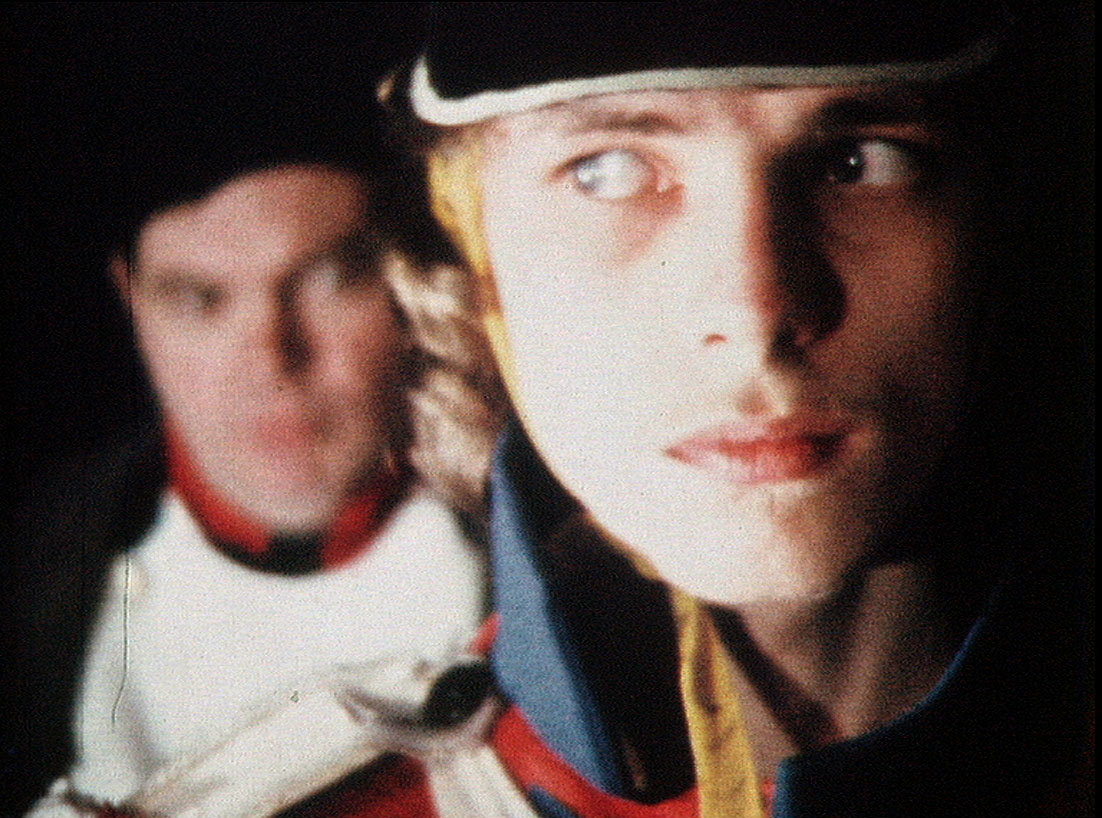
Krone, then a packer with heavy equipment manufacturer Hanomag Henschel, bought himself a sewing machine and started tailoring costumes. He had a grand dream – to create an epic masterpiece. “I was taught how to make seams in a sewing machine business. Buttons could not be done with a machine. So I produced everything myself – including the standing collars with cardboard inside. And guard caps from artificial fur.” By the end of filming, there were 100 costumes: infantry, marshals, generals, Russian soldiers, and hussars.
First the costumes, then the screenplay
He got together with eight friends to discuss the screenplay. Krone sketched drawings for every scene. This was the plot: Bernard Rousseau is enlisted by the military in France. He falls for the uniforms. “He was blinded by the colors of the smart clothes,” explains Krone. He loses his best friend at the great battle of Borodino and deserts with two other soldiers. On their escape, they cross paths with some rebels and a general. Rousseau is captured with his friend Michele, but he manages to escape. However, his friend is shot. Napoleon’s Grandee Armee is finally smashed in the battle of Beresina. Rousseau comes across countless corpses and takes a telegram from a dead Belgian and pretends to be a courier rider. Thus, he announces the end of the battle in Moscow and finally returns home. “The whole story is told in flashback. One sees the central figure as an old grandfather, who tells everything to his grandson when he comes through the door with a saber,” recalls Krone.
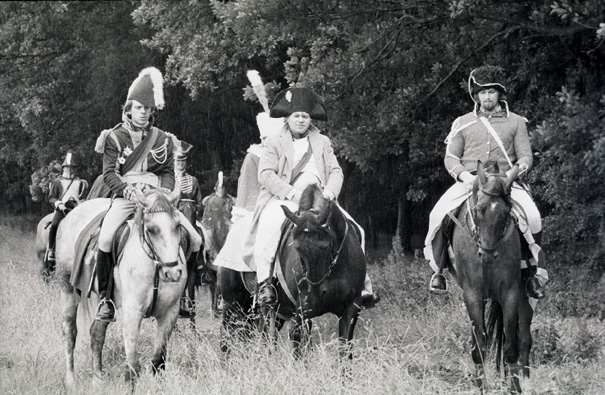
Shooting the monumental work required 200 actors. “I had to take out classified ads. However, many women, children and riders were also found through word of mouth. Our soldiers fetched their families and friends to join them on the battlefield,” Krone laughs. Yes, the battlefield – a field not far from Hanover. Police riders were also used there. “And black hussars, whom I approached at a defence unit close to Hanover.” All together, 30 horses took part.
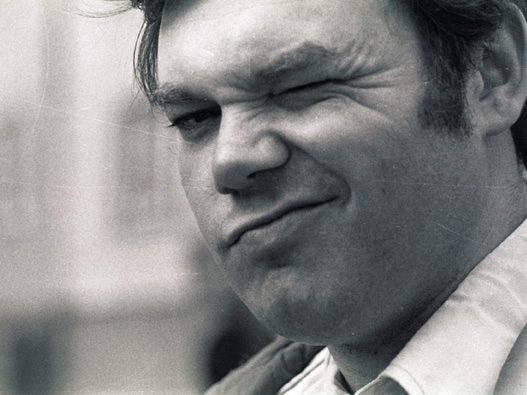
Krone – substantially older than his youthful friends who were used as soldiers – got the role of Napoleon. “I was a principal character, director, scriptwriter – and costume tailor.” And that wasn’t all. He also had to produce the weapons himself. “I took broomsticks, sawed off the handles and mounted bells from the market on them. I made cannons out of stove flues which I was able to nick from Hanomag, my employer.”
Six years and 30,000 DM later
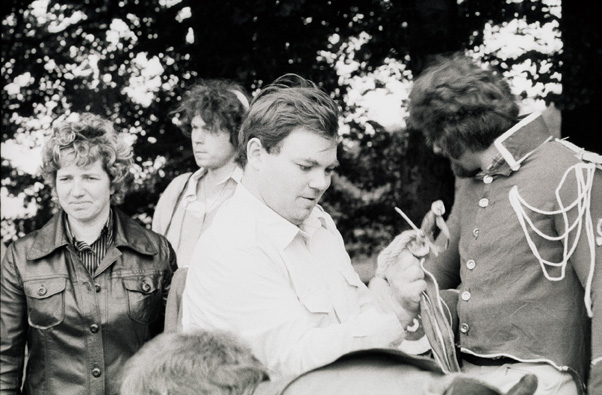
The film was shot without sound on a Beaulieu 5008S. Only years later was sound added to the film. “While shooting, many of the actors left their scripts at home and improvised with nonsense,” explains Krone, still shaking his head about it today. The postproduction began in 1982 and lasted two years; “I built a shelter for my projector on the balcony and projected through the window. This allowed everything to be captured on a tape recorder without background noise.” But Krone’s actors were not always solidly behind the project. “They were young and fooled around a lot. I doubt anyone shouted ‘Aye, old man!’ on a Napoleonic battlefield,” exclaims the director.
By the time the 80-minute film was finished after six years, 30,000 DM (former German currency, approaximately 15,000 US-Dollar/Euro) had flowed into the project, including the camera, film, projector, tape recorder, screen – and the costumes. Krone made six 16mm copies on 800m reels in anticipation of great success. However, then came the disillusionment.
“The première in Hanover was well attended, but only six attendees came to the cinema for the next showing in a provincial town near Hanover. I even had to pay the heating there myself. By the seventh and last showing in a sofa cinema in Brunswick, only 300 spectators had seen my film.” Krone’s career dream had burst. However, at first this did not stop him. “I shot a gag film about the musketeers at the Royal Gardens of Herrenhausen. Once again I made the costumes,“ Krone laughs. “Then I wanted to try ‘Hermann, den Cherusker’ [Arminius, a Germanic leader who successfully rebelled against the Romans in 9 A.D.] I worked day and night varnishing shields, and ordered 100 swords and axes from a blacksmith. I also made Teutonic shoes and bought a palette of Real sandals.” However, the friends did not take part any more – and the money didn’t come. Nothing came of the project.
Krone the musician
Krone has been jobless for over twenty years. He wanted nothing more to do with filming. He became interested in music and started composing and singing. An appearance on a TV morning show did not bring the desired success. And a musical he wanted to put on with other unemployed persons hasn’t gone anywhere. Krone, who has lived alone in Hanover since the death of his mother, is still not bitter.
Wolfgang Krone had a stroke last year. During the rehabilitation process, a nurse came up to him and said, “Oh, Hello! You’re Napoleon!” This seems to have motivated him, because he wants to shoot a film again. This time, however, it will be a crime film.
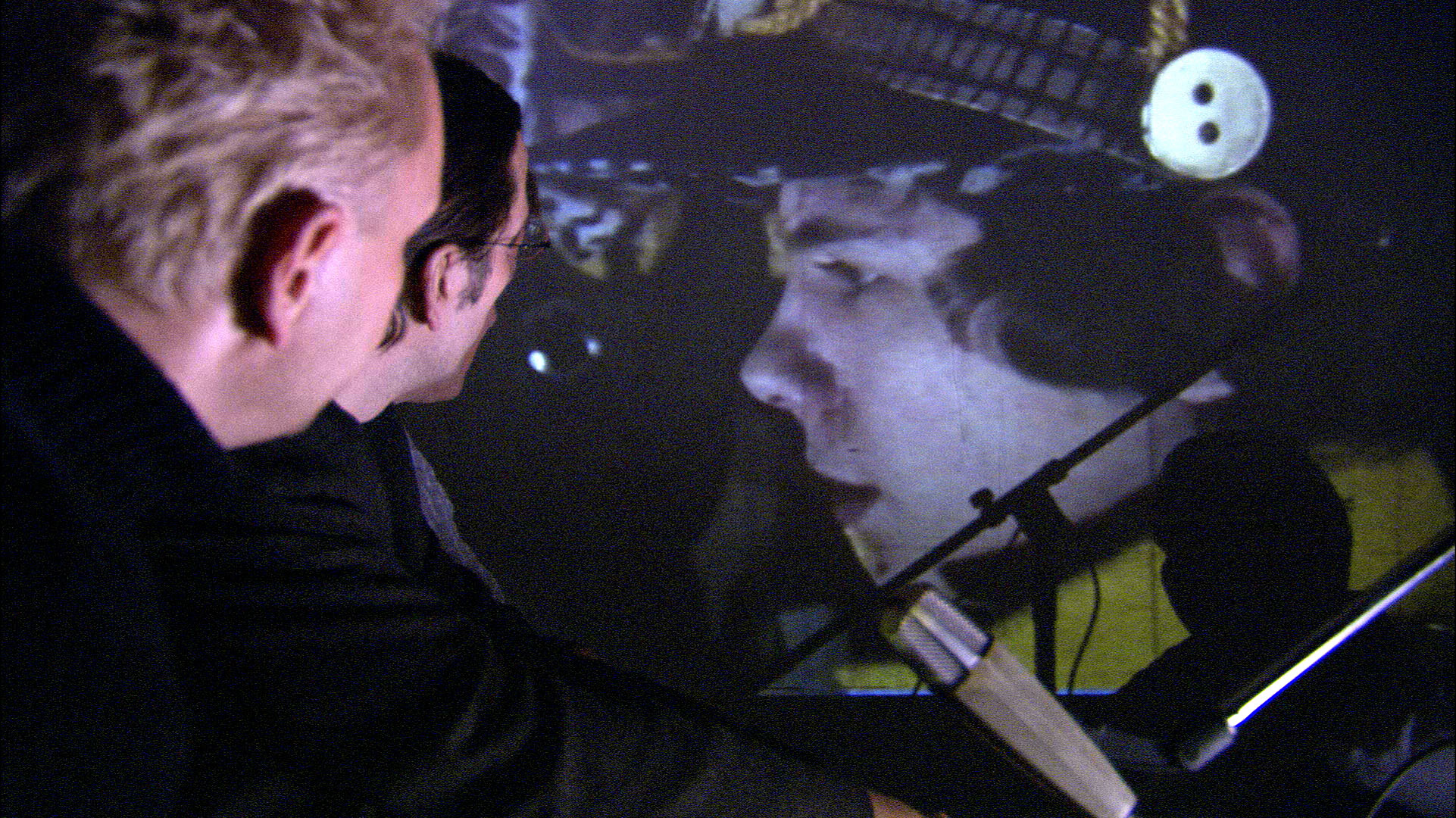
A German/Dutch documentation about Wolfgang Krone’s Super 8 film: