Don Easterly: Bricks for Kodak
About the Instamatic cameras
In 1955, during his studies at the Rochester Institute of Technology, Donald O. Easterly came to Kodak for a three-month internship. Thus he began his career in camera development as a technical draftsman. He would stay with the company until 1986, being promoted to Manager of Development of Amateur Products. Easterly had a decisive role in the design of the 8mm and Super-8 cameras. Here are his thoughts about Kodak.

“In 1957 Kodak was caught by surprise when competitors introduced automatic exposure control and zoom lenses. Kodak had been first on the market with an autoexposure “620” camera before World War II. It was very unreliable and was dropped from production and forgotten. No research was being done on autoexposure, so when competitors made their announcement, we had to scramble. I was asked to work all possible overtime hours and work after class and weekends during the school quarters. It was soon realized that we could not tool up a fully automatic camera in time for Christmas 1958, so I was assigned to develop a semi-automatic camera and get 50,000 units made by November 1958. It was called the “ScopeSight” and consisted of a telescopic viewfinder on top of a Brownie mechanism with a meter placed within the viewfinder and controlled by a knob to couple the meter to the aperture.
-
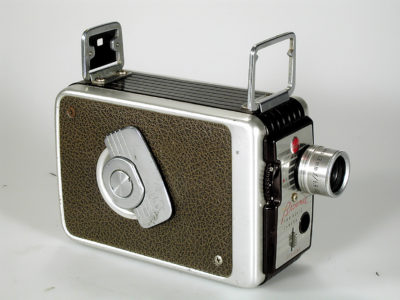
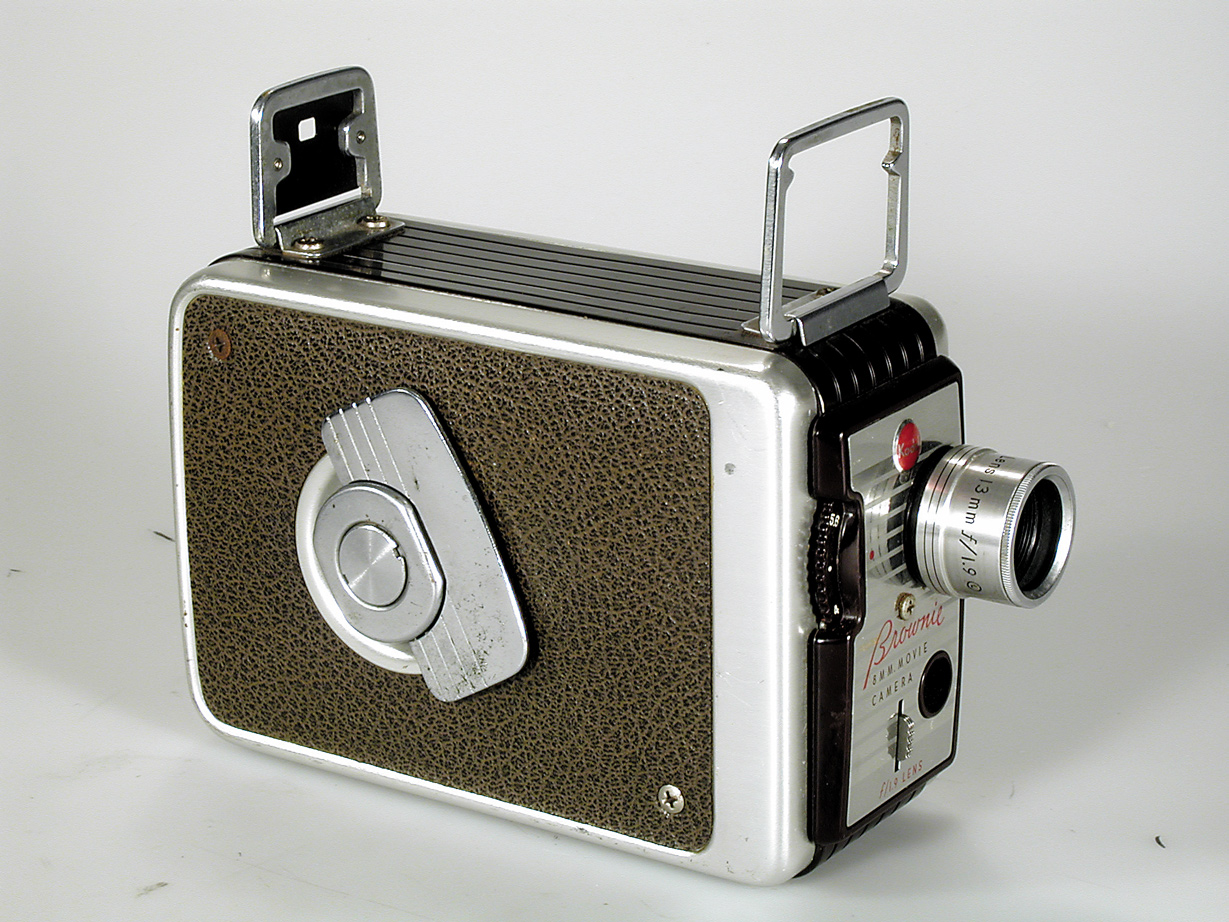
- “Kodak Brownie 8mm Movie Camera”, 1953
-
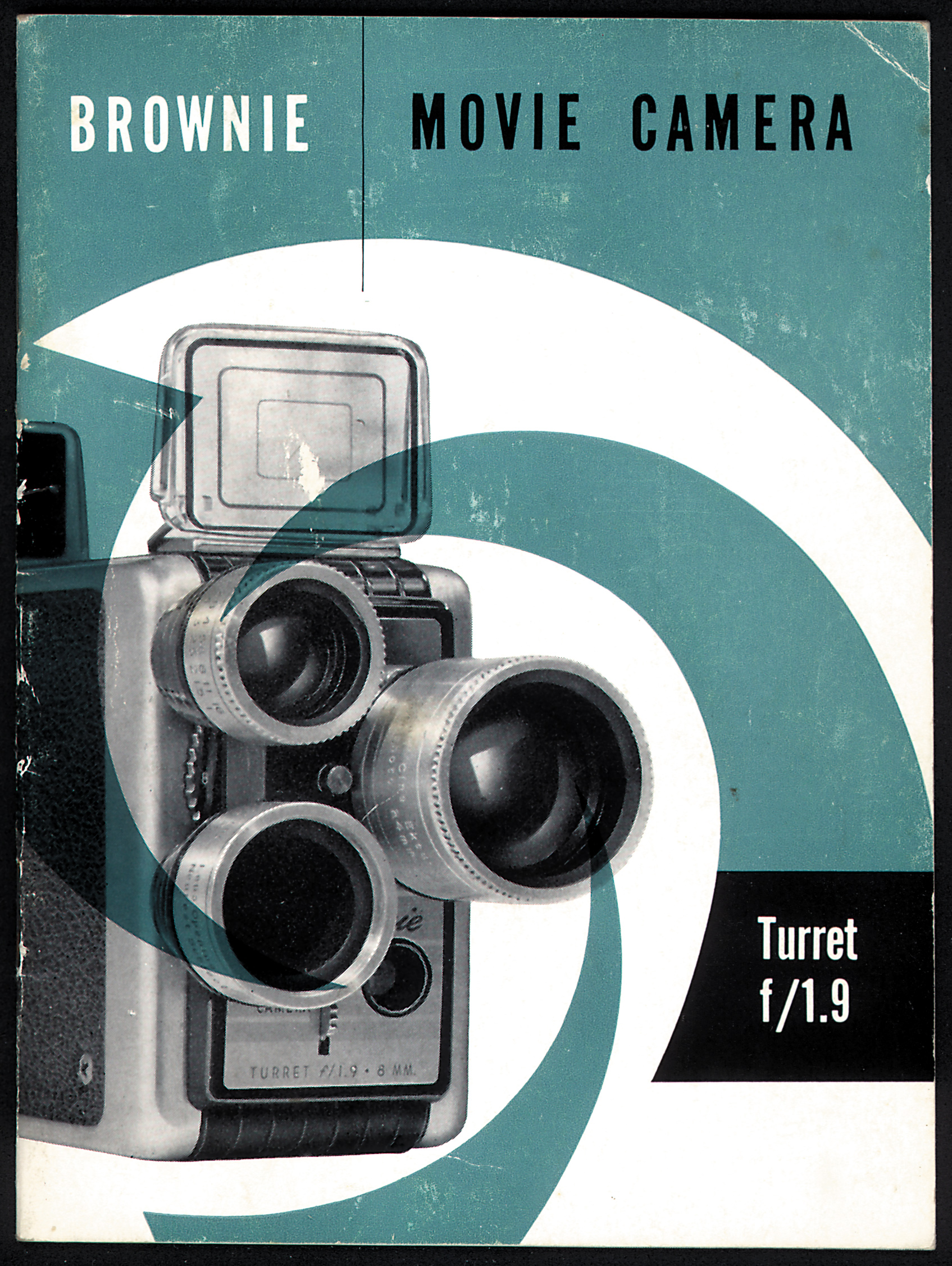
- The American instructions for the “Kodak Brownie Turret f/1.9,” 1956
-
- Advertisement for the “Kodak Scopemeter” in “Der Filmkreis”, 9/1959
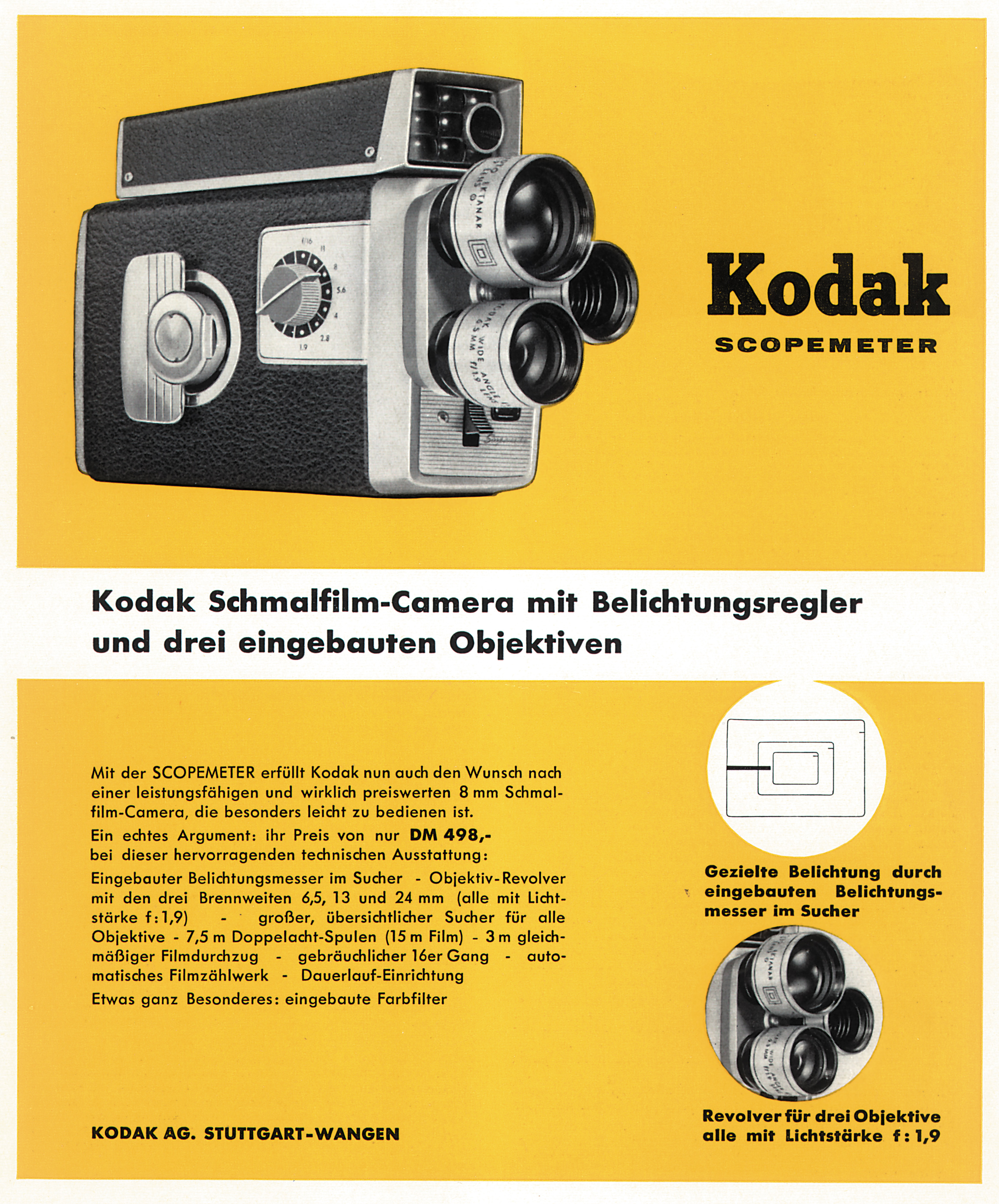
Kodak had a very busy year in 1958 as it tried to catch up with the competition. Several teams were in place developing fully automatic exposure control while my team got the semi-automatic “ScopeSight” camera into production. We purchased the meter from General Electric Co. GE had a nice little business making hand-held exposure meters. Kodak management got to know the engineering staff at GE and lured one of their senior engineers to come and work for Kodak and head up a team that was assigned the job of getting Kodak into the meter making business. One of the fatal flaws in Kodak’s manufacturing strategy was the attitude that Kodak had to be self-sufficient and manufacture all parts and components for our products. If we needed a motor, we had to make it; so if we needed meters, we had to make them. This attitude carried through to the 1990s, and as a result Kodak found itself knowing little about a lot and having five million square feet of excess capacity in the Elmgrove Plant. In June 2000 Kodak arranged the sale of this complex.
One of the challenges of autoexposure control was avoiding patent problems. This led to the single vane aperture control instead of the double vane as seen on Bell & Howell. The single vane was simpler and more reliable but sacrificed about a half-stop in maximum aperture.
My next project starting in 1958 was the “Zoom 8 Reflex” camera. This was another crash program to catch up with the competitors. Our optical experts were familiar with zoom lenses but claimed their quality was not good enough. They were proven wrong! Again we used the “Brownie” camera’s transport mechanism and added a die cast viewfinder housing, a die cast meter/lens holder and a die cast front cover. It was not designed for minimum cost, but how could we get it into production in the least amount of time? We were not yet in the meter making business, so we contracted with a German firm to install the complete meter and autoexposure system. We designed a die cast mounting plate to hold the zoom lens and the exposure control. Some preliminary assembly of optical parts was done in Rochester; then a rather large sub-assembly was shipped to Germany for assembly of the exposure control system; then shipped back to Rochester for final optical assembly. My specific task on the “Zoom 8 Reflex” camera was to develop the power zoom control system. The camera was introduced in 1960.
At the same time, other teams were at work on cameras designed more for cost than speed of introduction. One group was designing a minimum-cost plastic “Brownie” movie camera rather than the stamped metal version. Another group was designing the “Electric 8” movie camera, our first motor-drive camera. The “Electric 8” line was introduced in 1963.
A large number of books on Lionel, the toy train company are being written and published. Lionel and Kodak went through many of the same difficulties, and I find it fascinating to make comparisons. Kodak and Lionel both found stamped metal construction to be most economical for pre-World War II products and for a few years after. In the late thirties they both tried thermoset materials in a few applications, then they both went to thermoplastic for a majority of products in the 1960s. For both companies these plastic products took a while to catch on—the marketing department was afraid of a perceived quality problem.

Therefore, our design activity on Super-8 was quite an experience. We designed a line of cameras from a manual aperture control 13mm lens to a fully automatic zoom, all using a common transport mechanism. The transport was mounted on a die cast inner frame and the covers were a glass-reinforced plastic material. Marketing could not accept the plastic covers on a top-of-the-line zoom camera, so we redesigned the zoom camera using a stamped metal frame and die cast covers. The 13mm lens models were introduced in 1965 as the “M 2” and “M 4” cameras. The zoom was introduced as the “M 6.”
Another design fiasco concerned right-hand camera loading. One of our managers realized that home movie cameras were left-hand loading so that winding of the spring motor could be done with the right hand. Once the decision was made to have electric motor drive for all Super-8 cameras it was decided to make the cameras right-hand loading. Sounds simple, and it would have been, except for the fact that we had all the drawings done, and some of the tooling for the Super-8 cartridge was also done. Also we had working camera prototypes completed. All had to be redone and without any slips in the planned 1965 announcement.
We also discovered some performance problems in cartridge testing; the solution to the problem required making the cartridge larger so again all our camera models had to be rebuilt and cartridge tooling redone. It was a very busy time in our lives with much overtime and little family life.
-
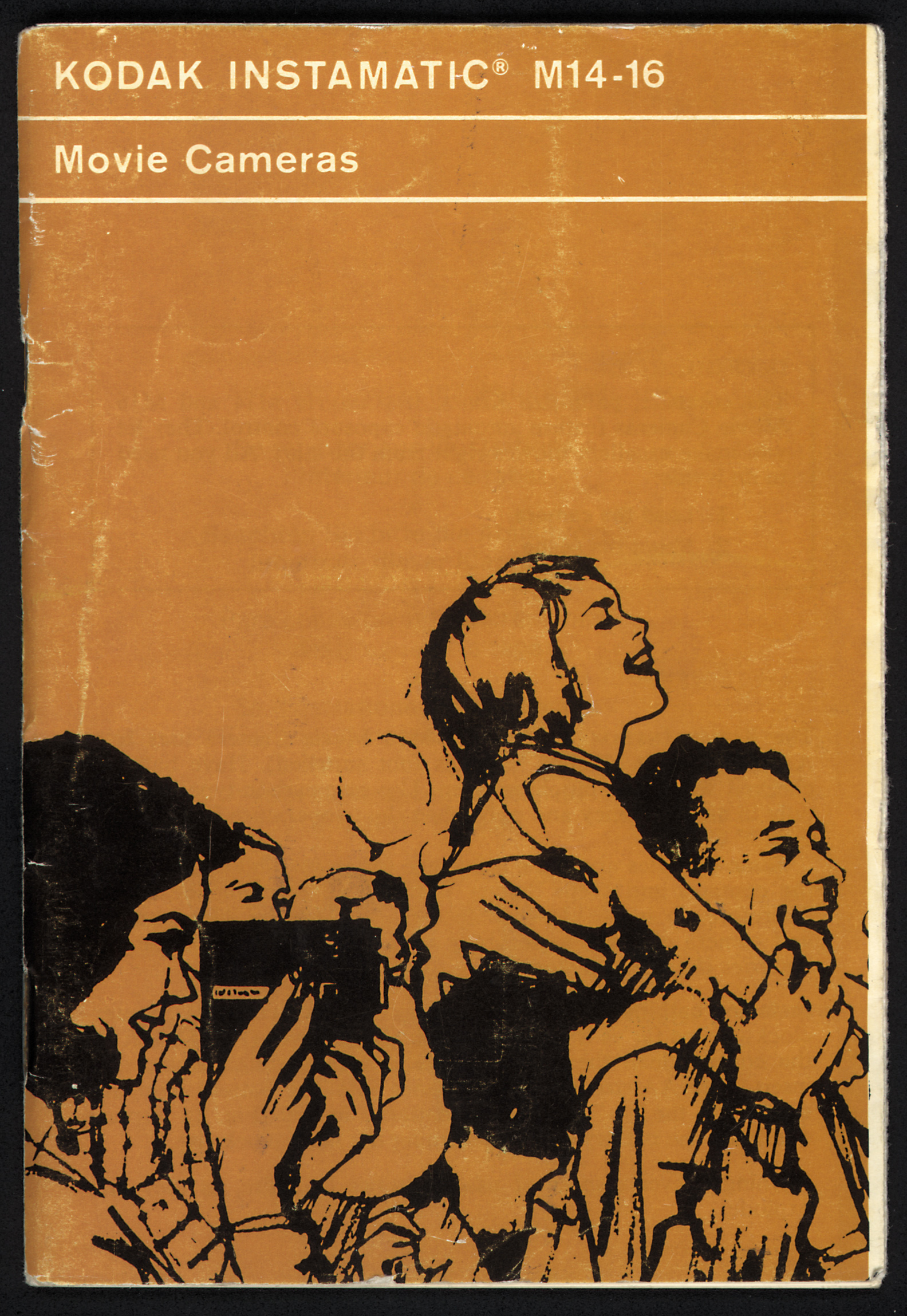
- The English operating instructions from 1967
-
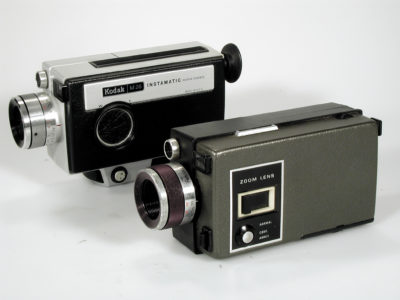
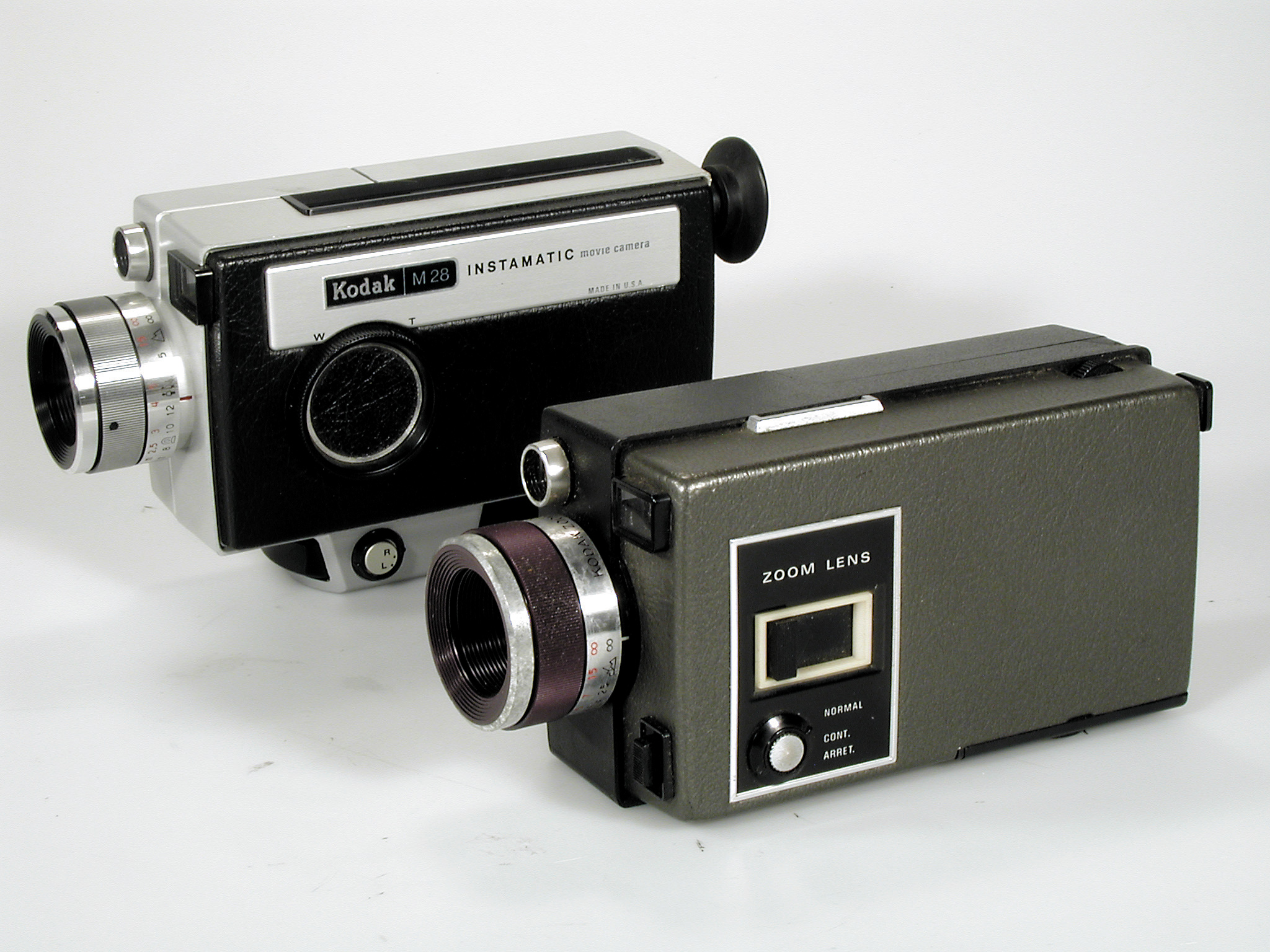
- The 1968 “Kodak Instamatic M 18” and the 1969 “Kodak Instamatic M 28”
-
- The cheap plastic box: “Kodak Instamatic M 12” from 1967
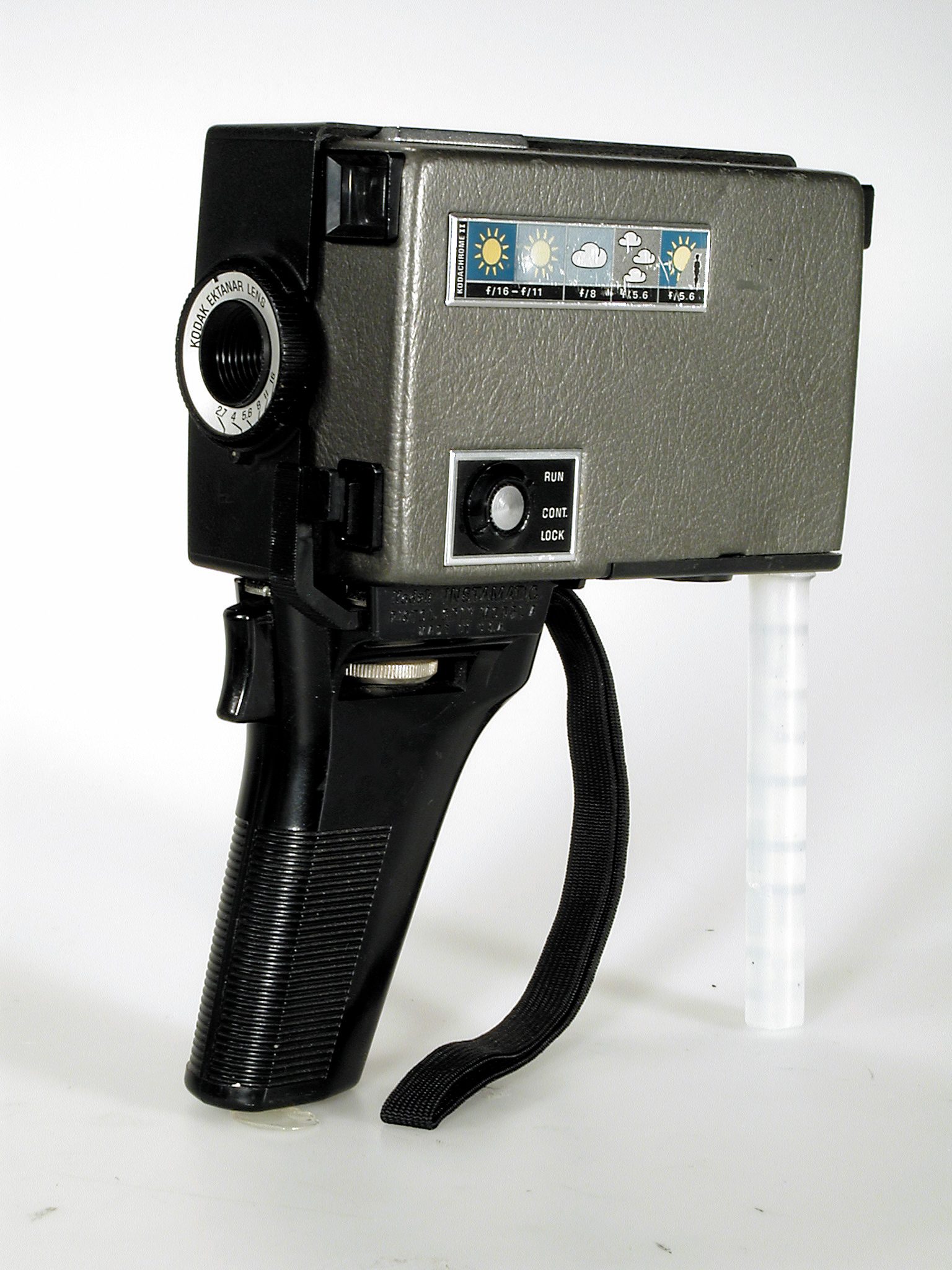
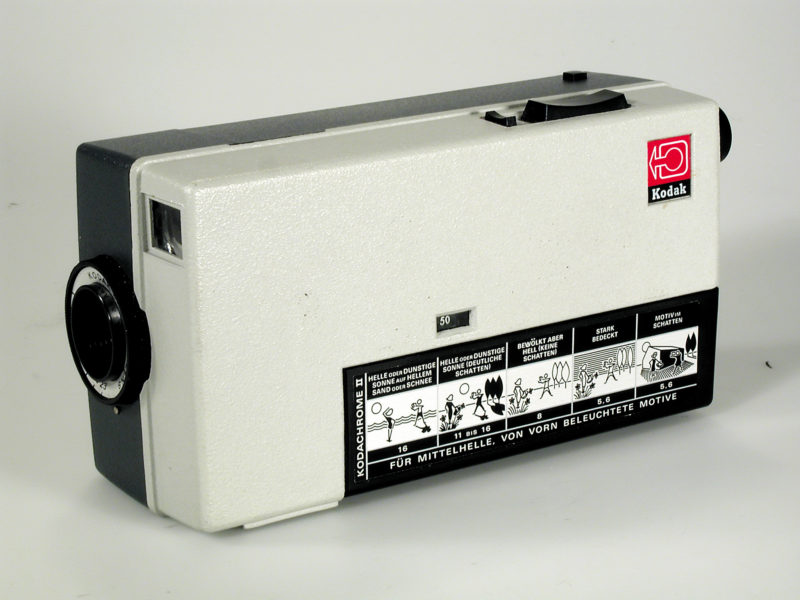
Our cameras were not received very well by our salesmen and dealers. The “M 2” and “M 4” were called the “brick” and the “M 6” was high-priced because it alone did not have high enough quantities to amortize the tooling at a reasonable rate. Therefore we went to work on what we called the “Petite cameras.” These cameras were all plastic construction and became a full line from fixed focus to zoom using common transport systems, just as we had wanted to do on the original program. These new cameras were all smaller and much lighter. We hired Wilt Chamberlain to hold one in his hand, and then called them “Palm Size.” They were introduced in 1966 as the “M 12,” “M 14,” “M 16,” “M 18” and “M 20.” However, they were not exceptional in appearance and were nicknamed the “little bricks.” So once again we tried to get away from the brick appearance and started designing a line with a folding pistol grip. We also decided the time had come to design only for alkaline batteries; so only two were required. This allowed a smaller size.

I was almost fired over the appearance of this new line of cameras. The industrial designer assigned to this project was not coming up with an improved appearance, and I was not going to be embarrassed again for a poor appearance, so I sat down at the drawing board and did my own industrial design. When the industrial design manager saw that I had some wooden models under construction in “his shop,” he went to our top manager and asked that I be reassigned. They all came into my office ready for a showdown. My wooden styling model had just been completed with a nice coat of paint so I displayed my model against their model and the case was closed. I was told to proceed at top speed and the industrial designer was reassigned. This line was the “M 22,” “M 24,” “M 26,” “M 28” and “M 30,” and they were introduced in 1969. They were small, light and ergonomically improved. They sold quite well.

The last Super-8 project was canceled before it went to market. We realized that with all the features we had added over the years, especially with the projectors, we had priced ourselves out of business. Projectors had Standard-8, Super-8, reel and cartridge, zoom lenses, high wattage lamps requiring noisy fans, etc. All of this could be eliminated if we designed a small personal laptop viewer for 50-foot (15-meter) reels only. The viewer needed a companion, so we developed a unique camera using mirrors to provide a 35mm camera format. This new camera and viewer were to be sold as an outfit that we hoped to sell for less than $100. The project was funded long enough to build and test engineering prototypes and complete drawings ready for release to manufacturing. Many reasons caused this program to be canceled—most of our resources went into Disc, Instant and a new slide projector. The main reason was fear that video would capture the home movie market faster than it actually did. In retrospect the Disc and Instant programs were major flops, and the redesigned slide projector did not improve sales, so we would have made more money for the company if we had pursued the movie program.
In 1978 no one was left in the movie camera design department.”