Developing Super 8 film yourself
Test of the FRÄNK prototype
Vintage Visual from Estonia has launched a crowdfunding campaign for a new Super 8 automatic developer, called FRÄNK. By the end of July 20226, 126 backers had raised over 116,000 euros. The machine is due to be delivered in the second quarter of 2027 – at which point it will also be available for purchase. Ben Slotover had the chance to test the prototype.
Vintage Visual, the company that brought us the AGO developing machine, has now come out with the FRÄNK, a machine that is “a semi-automatic, time-compensated motorized film processor for Super 8, Double 8, and 16mm.” While the AGO used a horizontally positioned cylindrical Paterson-style developing tank, the FRÄNK uses a spiral platter system similar to the LOMO tank, positioning the spiral vertically like a Ferris wheel inside a lightproof, watertight box. The concept is the same: The spiral rotates in and out of the processing chemistry toensure even development, thus less volume of liquid is needed than with the LOMO tank where spiral is fully submerged.
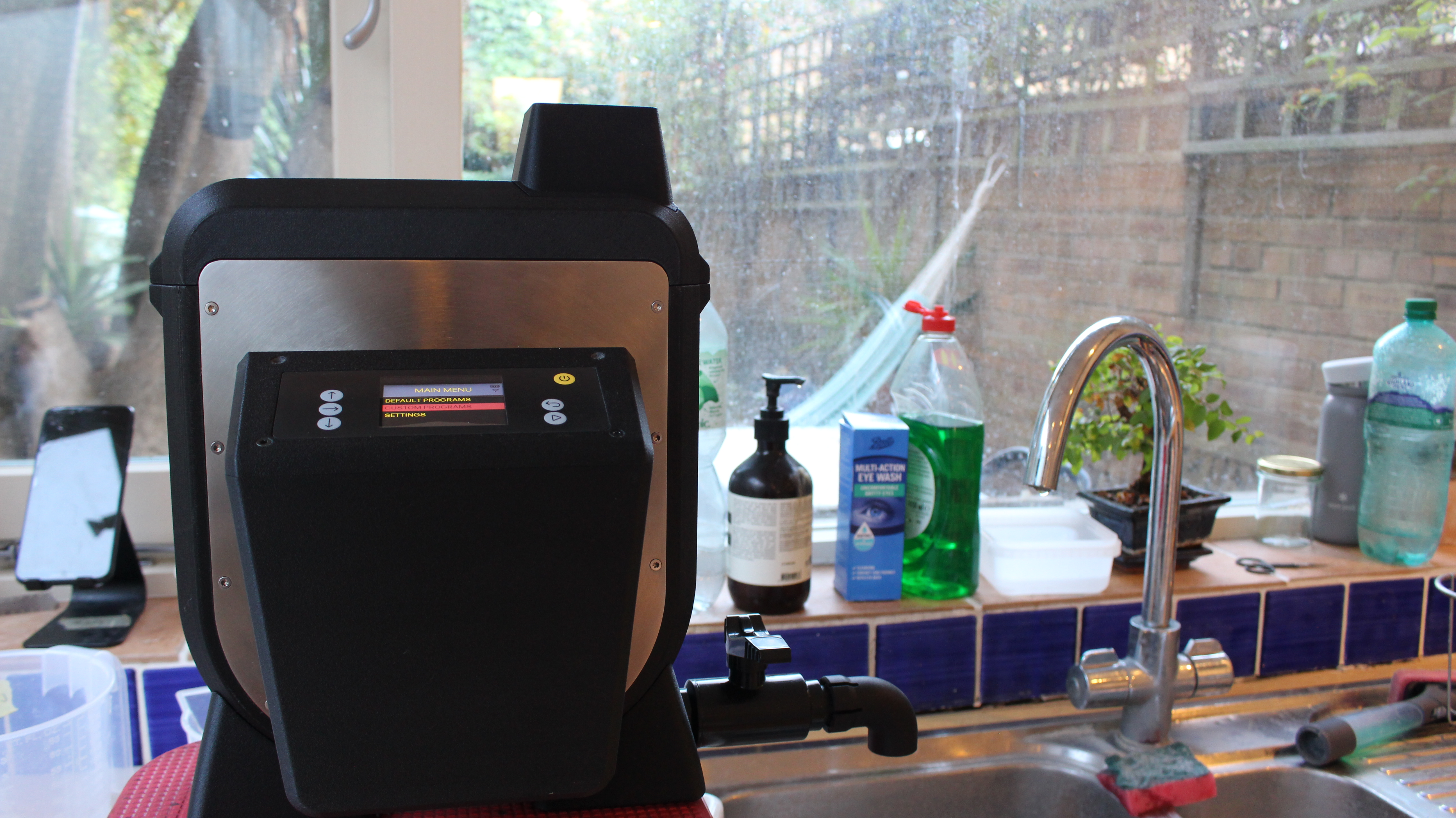
The box isn’t just a piece of passive hardware either. It contains a temperature sensor and a computer that controls the rotation of the spiral and alerts the user with alarms when it is time to drain and re-fill the FRÄNK for the next stage of the process. Fluids are poured into the top of the tank via an intake on top of the lid. The lid on the prototype was secured with magnets, but in the final version the lid has been upgraded to being held on with locking clips. In fact many features of the FRÄNK were improved after the Prototype, so some of the issues I describe may not be faced by the owners of the new machine. During the time I had the FRÄNK I was in contact with Joonas and Arno from Vintage Visual, telling them what issues I had and I will quote their responses and updates where relevant. I’m happy to say some features were improved as a result of these conversations.
The reels in the FRÄNK can be configured in multiple ways. Unlike the LOMO which holds the stack of spirals and plates with a spindle that screws in from the top, the FRÄNK builds the stack by screwing the spirals and lids onto a wide central spindle from the bottom up. In this way, 50 feet of film can be loaded onto a plate, then another spiral can be threaded on top. For 16mm users developing a 100 footroll, Vintage Visual propose cutting the film after 50’ with a splicer before threading the rest onto a top plate. These are all held in place by a chunky nut that is also the part that the motor engages to turn the spiral.
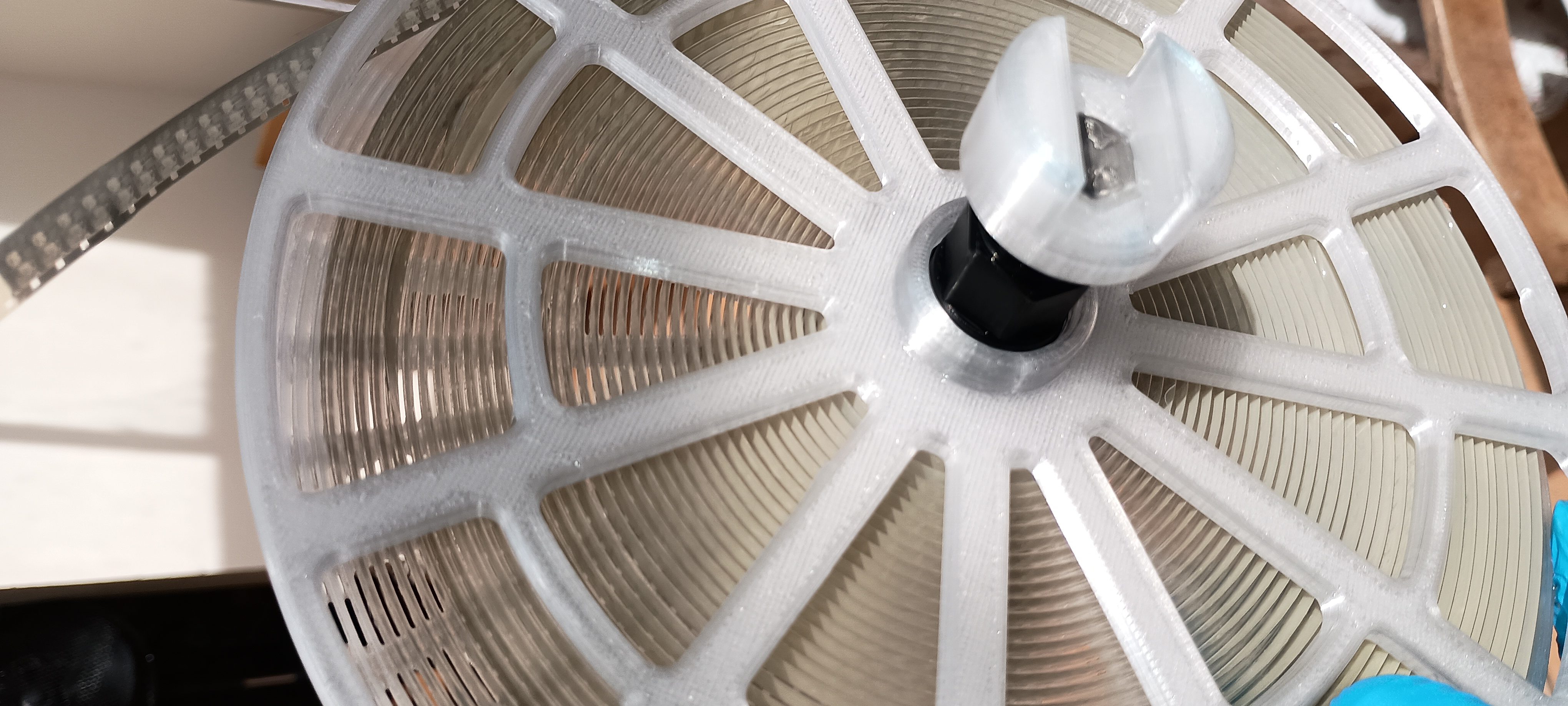
There were concerns that some frames would be lost by the second 50’ being threaded into the centre of the spiral but Vintage Visual have developed an ingenious design to clip the film to the centre using teeth around the centre spindle that will hold onto the film via the sprocket holes and allow all the development fluids to access it. In this way, they claim that not one frame of a 16mm 100 foot roll will be lost in spreading it over two spirals. However, it was the Super 8 I wanted to try out and I decided to do two reversal processes: one of Ektachrome in E6 and one of Fomapan R100 as black and white reversal.
The FRÄNK, like the AGO, has at its core a computer system to assist the process during the multiple baths the film must go through. The user will still be manually loading the film and adding and draining the fluids, but the ‘semi automatic’ description of the FRÄNK refers to its internal timer and rotation. When a timed period is over, the FRÄNK sounds an alarm for the fluids to be drained, the film rinsed and the next fluid to be poured in. Although the tank is well insulated, its temperature can drop by a couple of degrees during the bath, and the FRÄNK can be set up to extend the development time automatically to compensate.
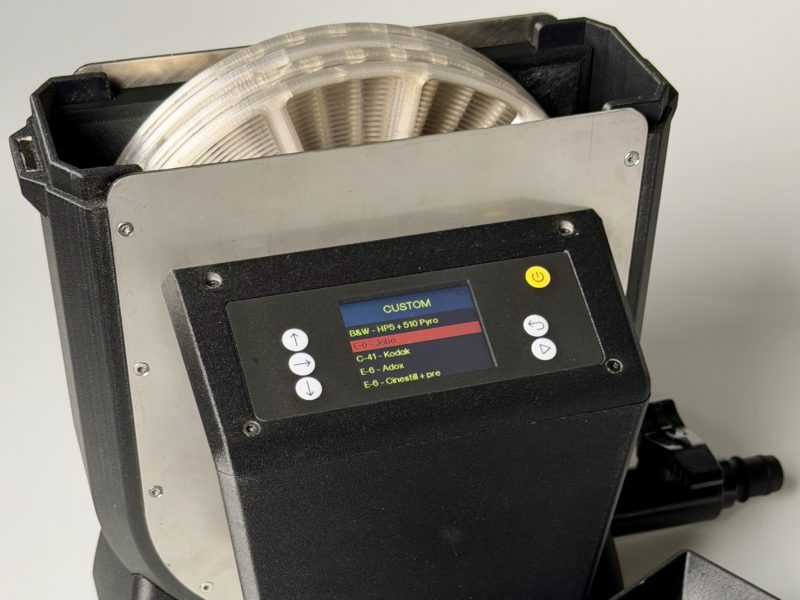
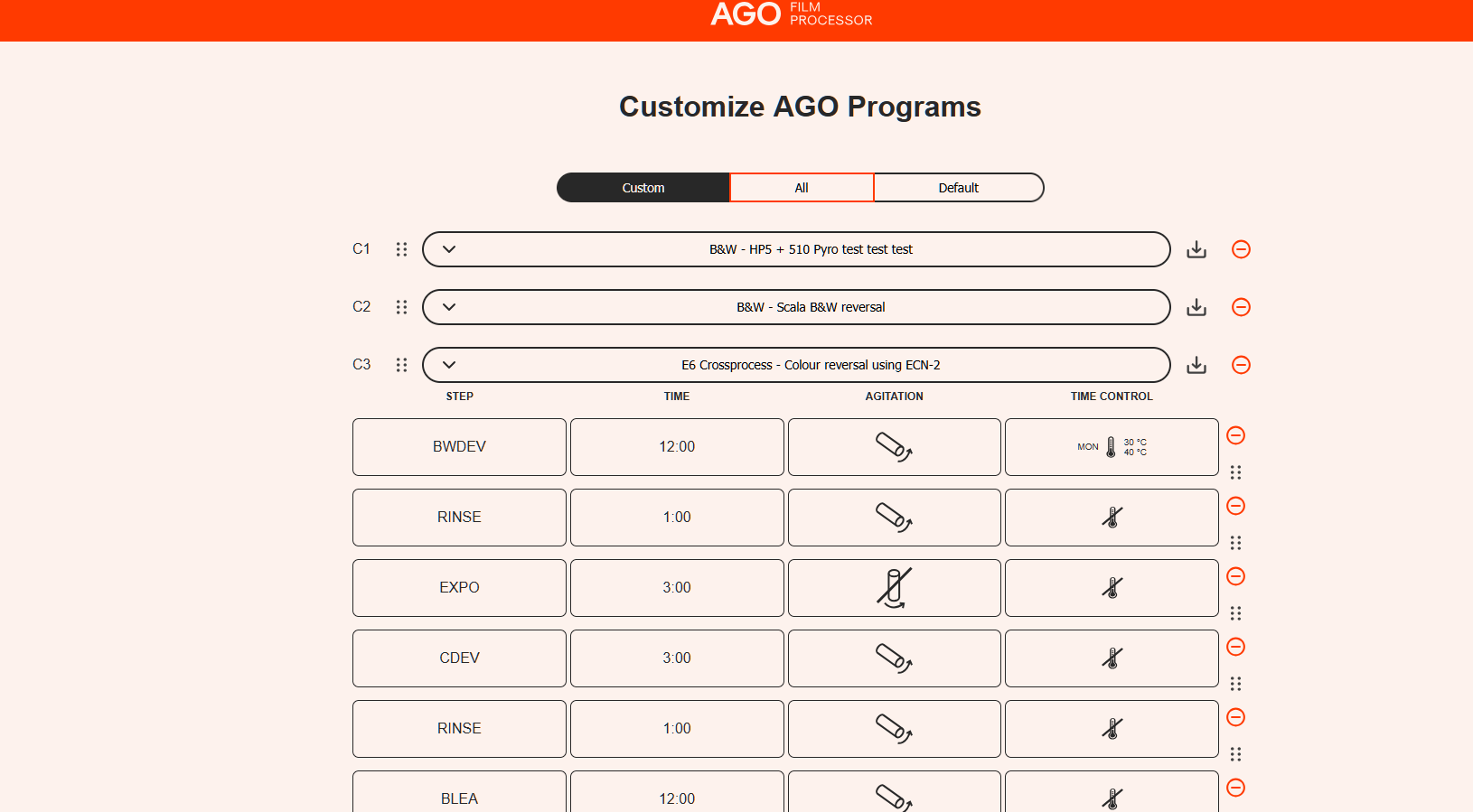
The FRÄNK comes with multiple developing programmes already loaded into it, to account for all kinds of commercial kits like the Bellini and Tetenal ones. Alternatively, if the user has their own process they can programme it into the FRÄNK using a Wifi connection to a computer. Once connected, an HTML basedinterface is fairly easy to use to load your own process and timings in.
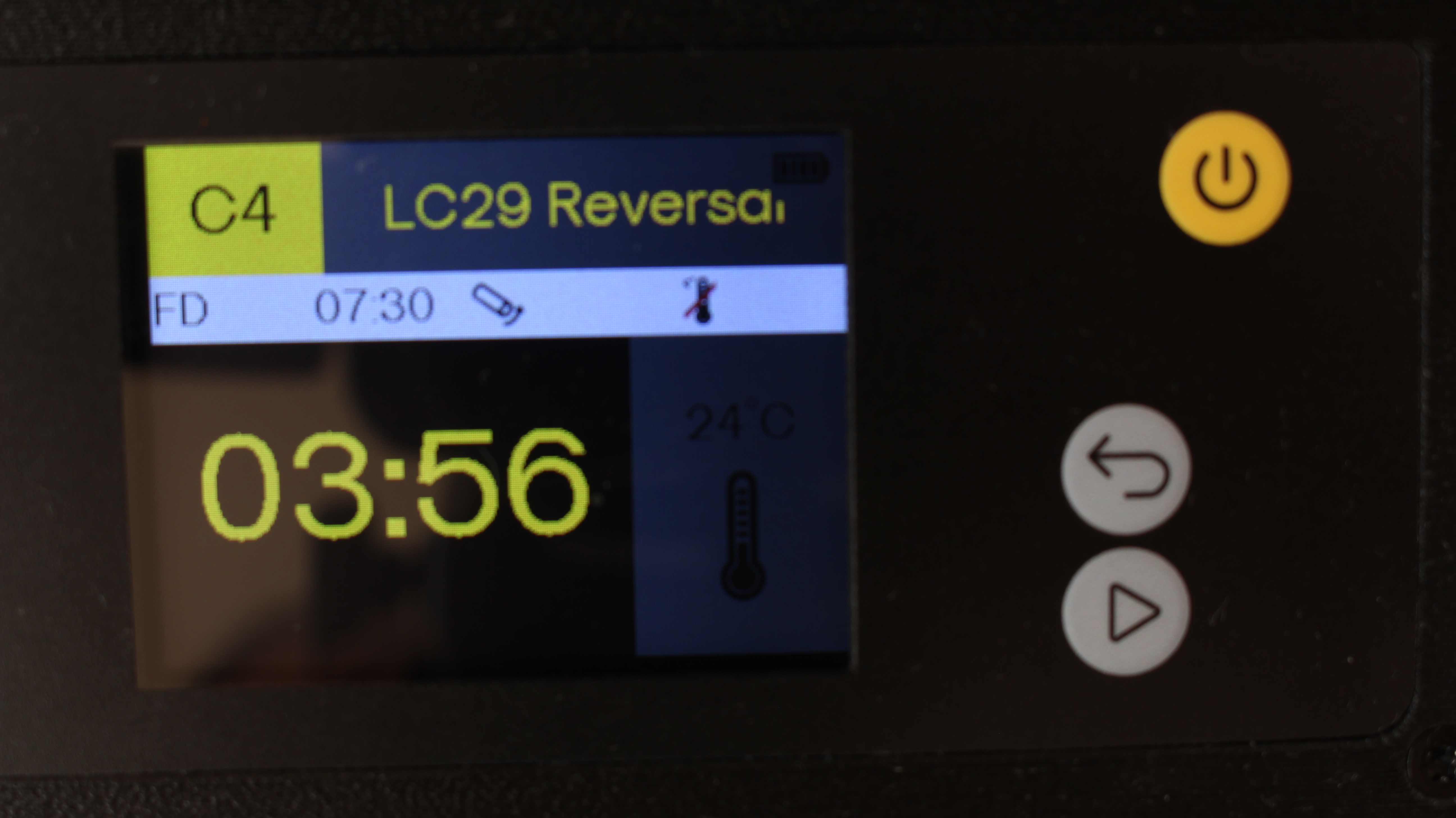
First was the Ektachrome in E6. The spiral was fairly easy to load if you are used to developing film in a LOMO tank. The spiral’s grooves held onto the film securely and didn’t let the film jump between them. The spiral and the FRÄNK must both be in darkness during loading, so a large changing bag or blacked-out darkroom will be necessary. Once the film is on the spiral, it must be placed into the FRÄNK so it engages with the rotating motor that will turn it during development. Once the lid is on the FRÄNK is ready to operate in the light.
Although Vintage Visual provided me with an E6 Bellini kit, it had not arrived in the UK by the time I tested out the FRÄNK, so I assembled an E6 process that I knew worked using chemicals I already had. The timings were non-standard so I programmed them first into the FRÄNK using the Wifi interface:
The FRÄNK can be programmed to rotate at different speeds or not at all. Afterpouring the first developer in I let it run constantly for the whole development. It was not easy to pour in the fluids without spilling them unless you do it very slowly. This could be an issue with the film at the bottom being in contact with the fluid for longer during filling. I suggested to Vintage Visual that they make a square ended funnel to fit into the intake to allow faster and cleaner filling. The outflow pipe on the prototype was also a bit messy, with the fluids coming out in a haphazard fashion toward the end of draining:
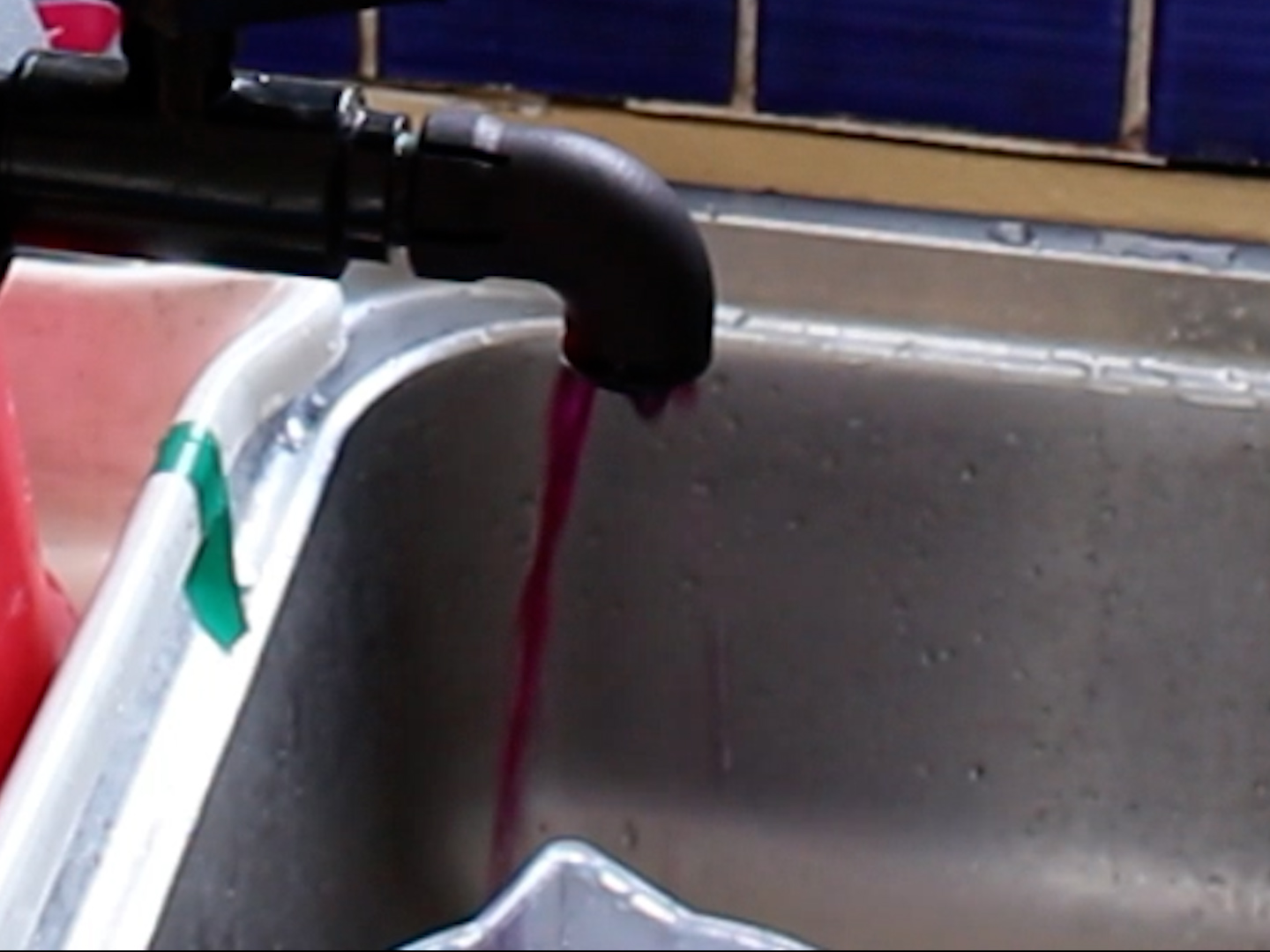
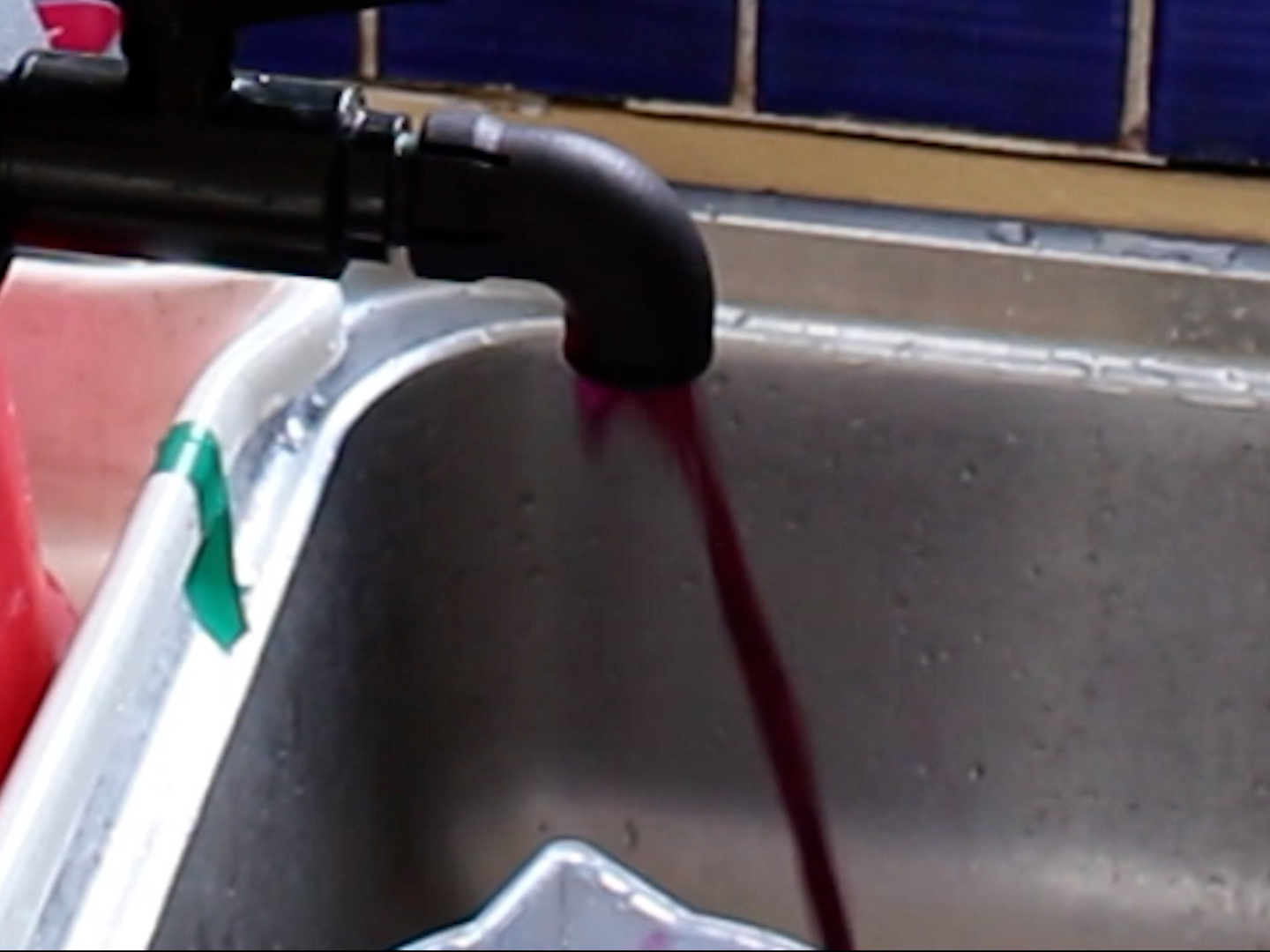
Vintage Visual say the outflow pipe design will be improved in the final version.
I also suggested a direct hose connection from a tap to the intake for rinsing. Once a programme is finished and the FRÄNK beeps its alarm, it will sit quietly until you are ready to begin the next stage in processing. Luckily after the first development the FRÄNK’s lid can be removed because the film is no longer light sensitive. This made it easier to fill and rinse the tank. Towards the end of the process I noticed something concerning: a line of black deposits along the left hand side of the film, where it was sitting in the spiral:
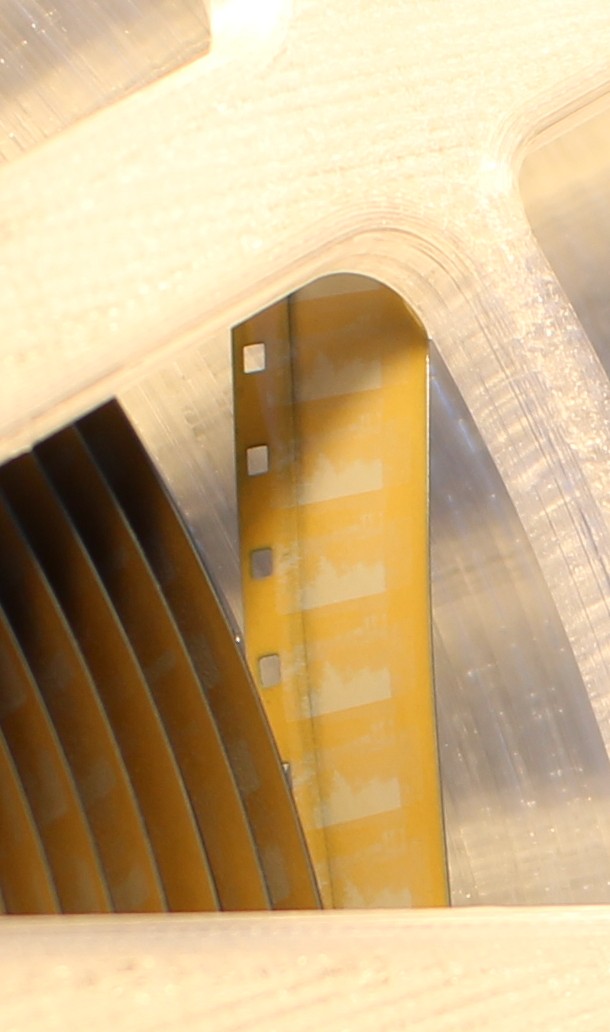
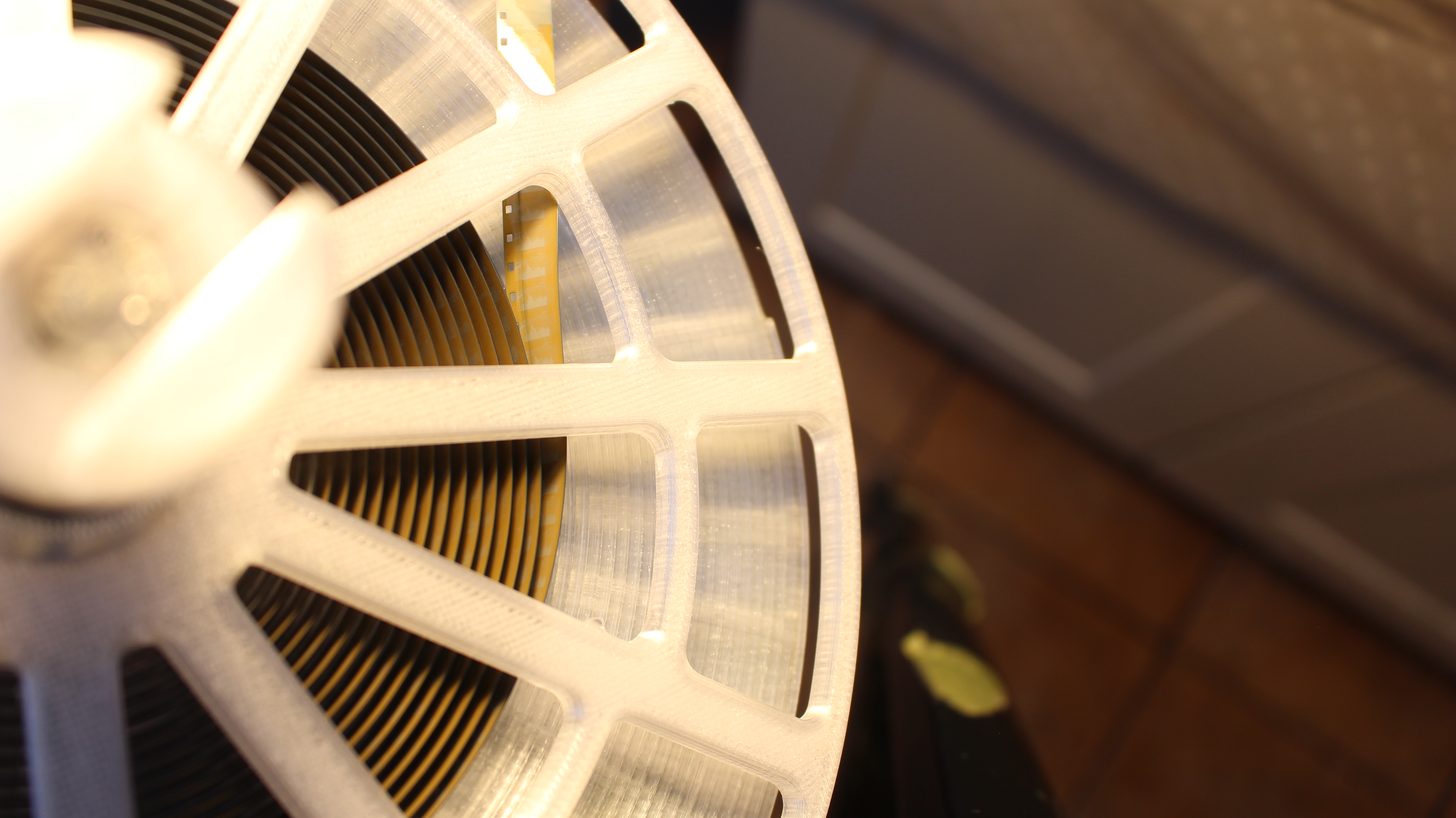
This demonstrated what I believe was the main fault with the FRÄNK prototype: That he grooves in the spiral were too deep. Although this enabled the film to sit securely, there may be difficulty in all the fluids being allowed free access to the whole film, and for the rinse to properly flush them out. The black line was removable with washing, which leads me to suspect the ECN-2 chemistry I used was not entirely clean. It possibly had remjet or silver particles in it which due to the spinning of the spiral, were collected in the crack where the film went into the groove. This reminded me of a gold sluice, which prospectors use on sandy, muddy river water to separate out the heavy gold dust from the lighter mud.
Although the black line could be washed away, I suspect its presence prevented other chemicals from reaching the film emulsion, as the final result shows:
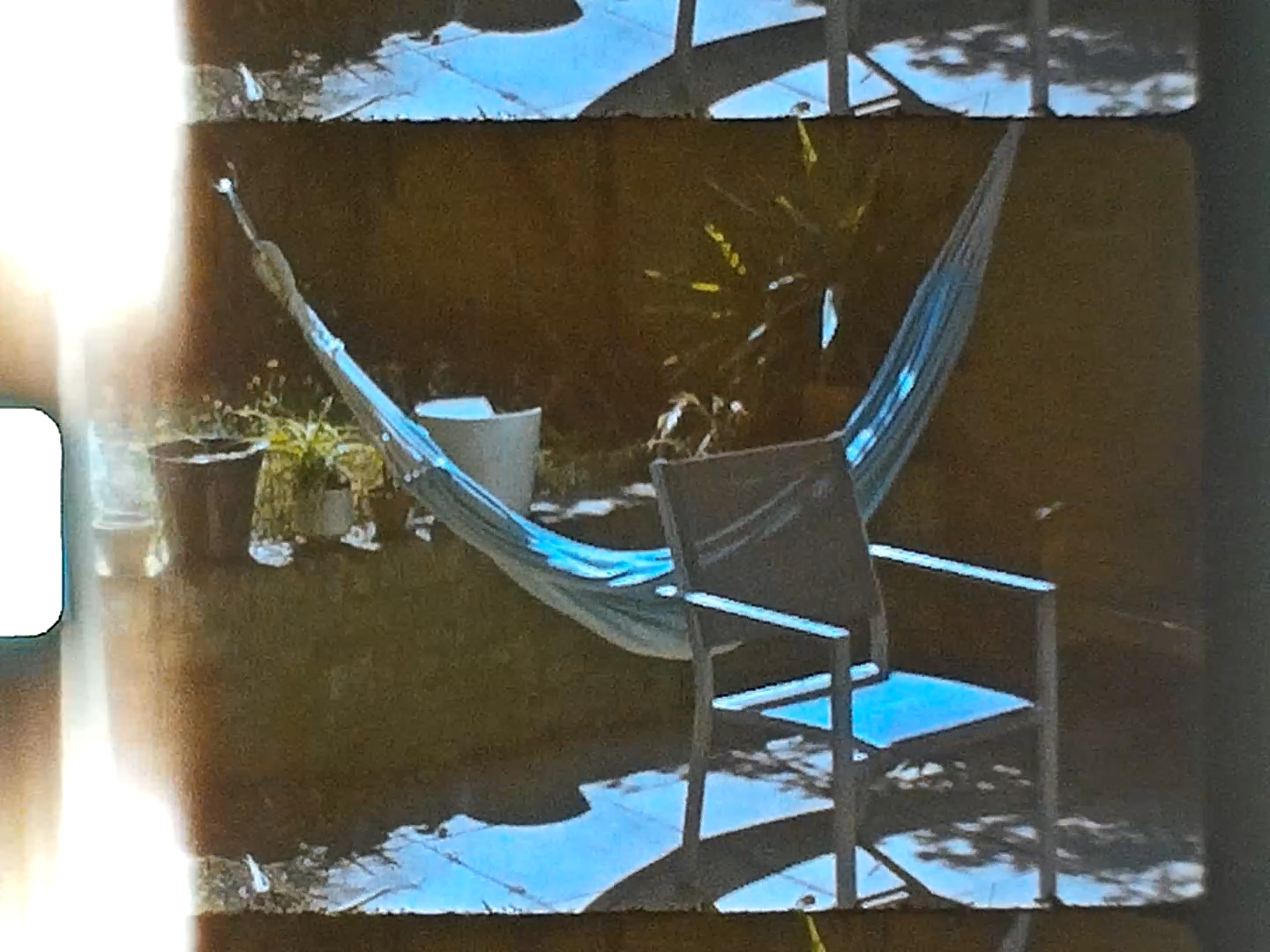
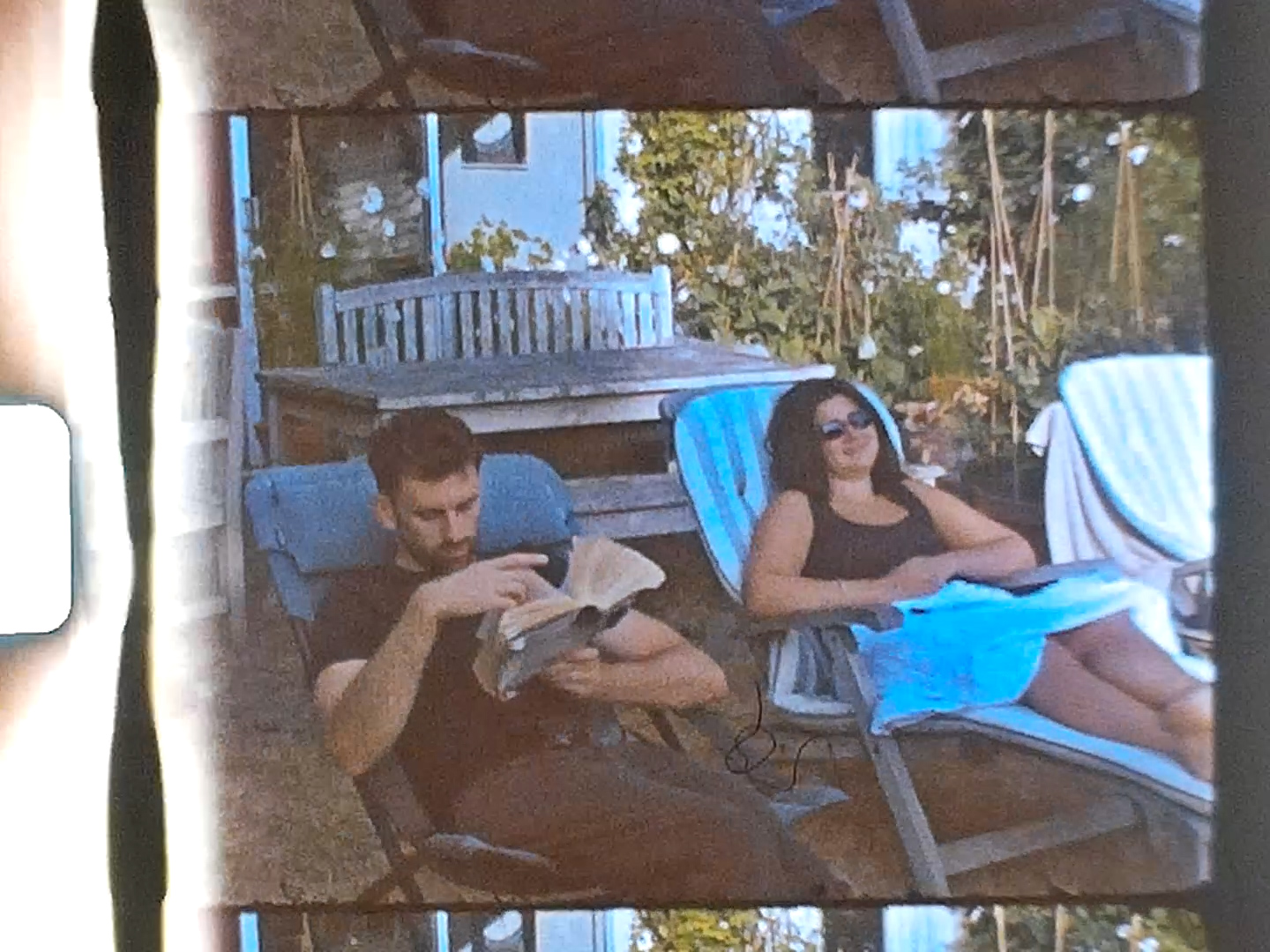
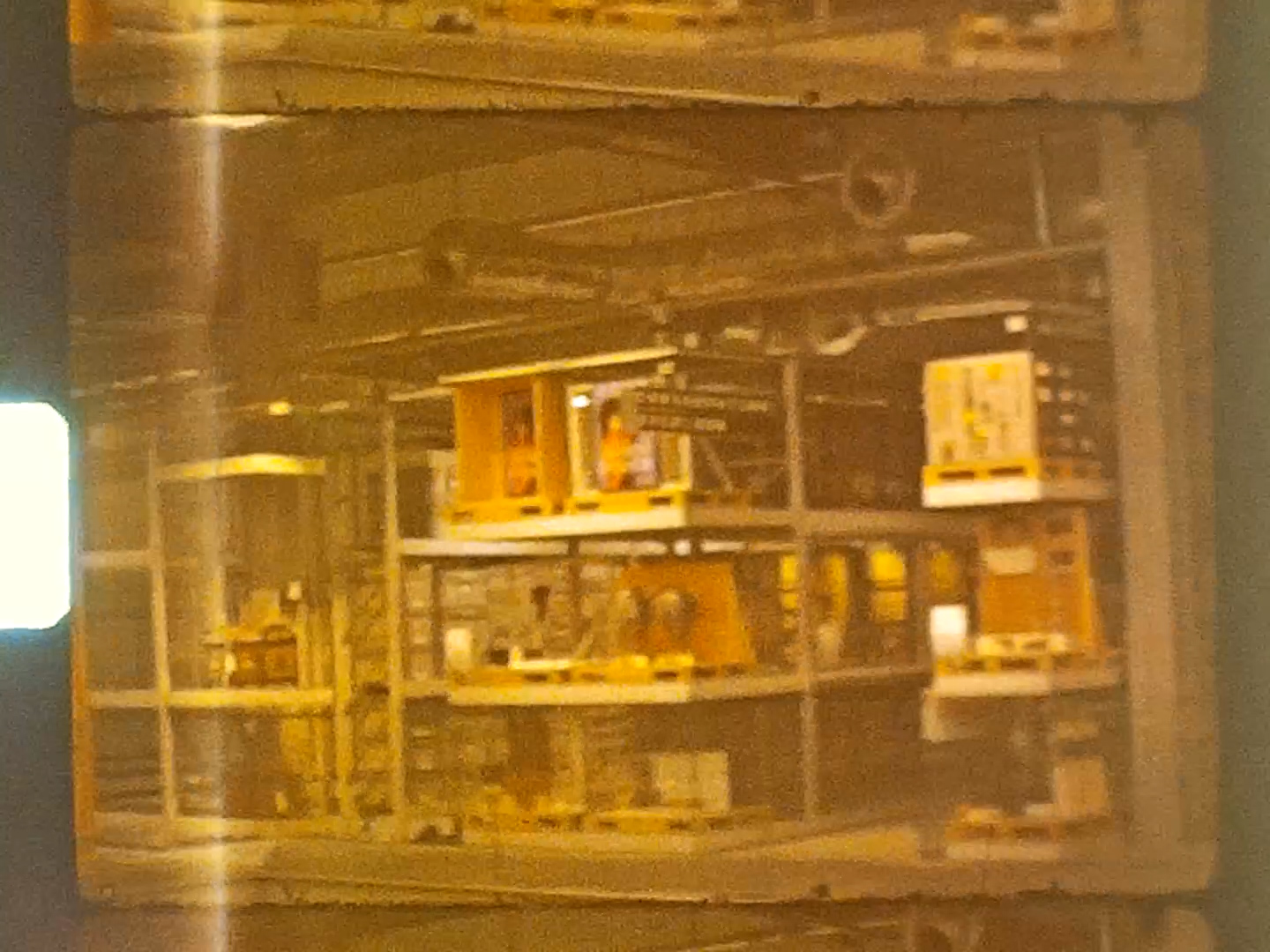
Vintage Visual assured me that while the prototype spiral was 3D printed, the final version will be injection moulded with shallower spiral to reduce this problem. One point to note is on 16mm there is more space between the left side of the film and the picture than on Super 8. This means that on 16mm more deposits or developing artefacts will be in the non-picture portion of the film, around the sprocket holes, so not as much of a problem as with Super 8.
Although it was my fault that I put dirty developer in the FRÄNK, it is not inconceivable that future users of the FRÄNK will do so too, so the makers are addressing this issue in the final product. Beside the spiral/deposit problem, the rest of the picture was very nicely and evenly developed. The fluids for E6 had to be at 38C and I measured a temperature drop of a couple of degrees when the FRÄNK drained. This was concerning because although the machine can compensate for temperature drops with extra development time, for E6 colours to come out right the temps have to be consistent. I am informed that an optional extra to the FRÄNK when it becomes available is a low level heater inside to maintain steady a temperature of pre-warmed up fluids.
On to the Black and White developing. The programming of the FRÄNK was quite straightforward, and in this case I didn’t have to worry about temperature drops. Once again I managed to spill Potassium Permanganate bleach all over the outside of the machine as I was pouring it in. Luckily the case of the FRÄNK is resilient and I could just wipe the spills off. Incidentally the FRÄNK is not powered by AC but by an internal battery charged via a USB-C cable. In all the time I used the FRÄNK it did not need recharging.
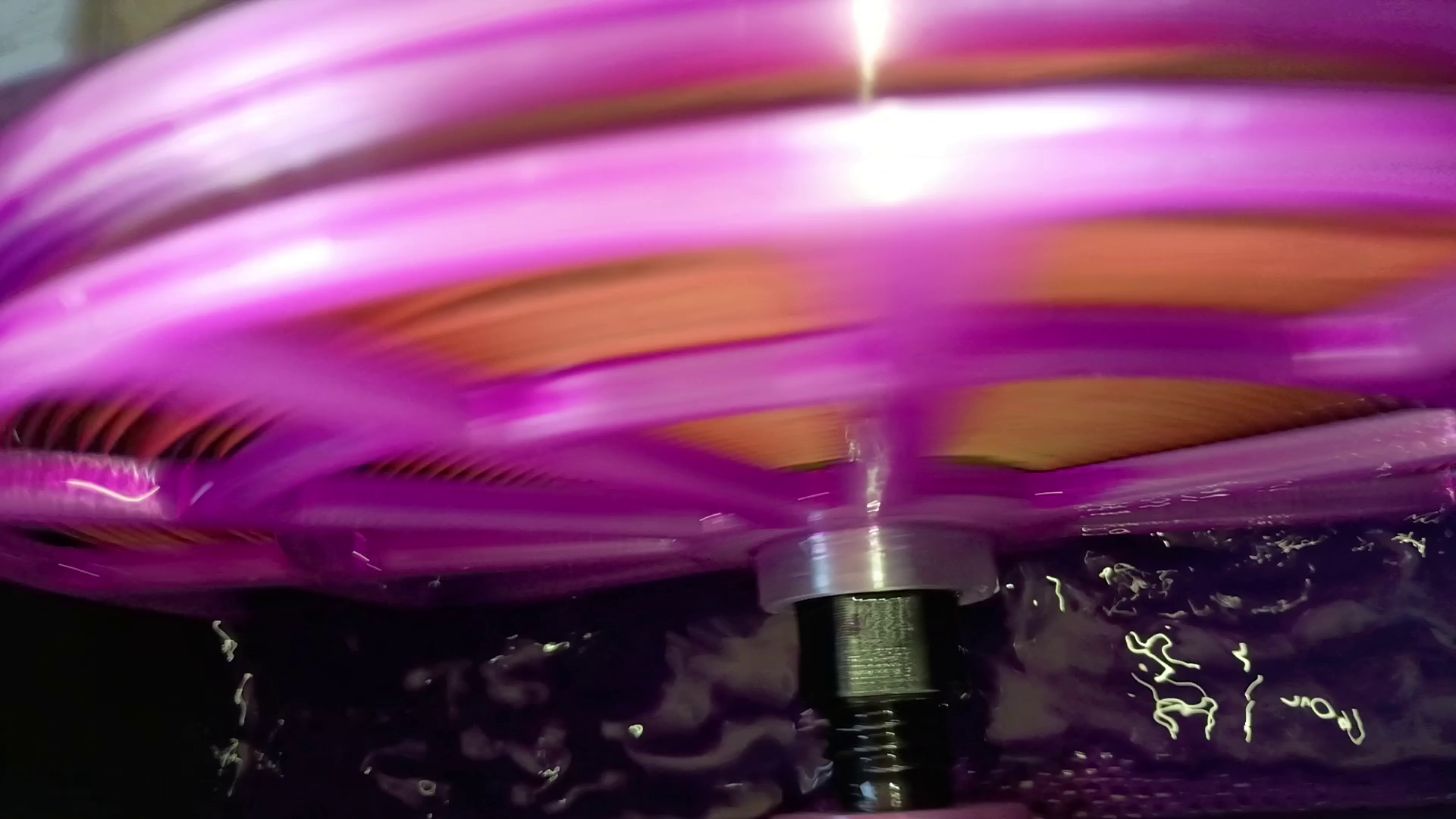
Fomapan R100 has a thick silver layer and I was concerned after the E6 that the bleach would not reach all the film sitting in the groove, so I allowed it extra time, five minutes instead of four. However I should have reduced the bleaching time instead. The extra agitation and the movement of the fluid actually softened the emulsion to a dangerous extent. Because the 3D printed spiral has a rougher texture than the classic smooth LOMO spiral, the film that sat in the spiral abraded against the spiral walls, and being extra soft, had its emulsion scraped off during the bleaching and subsequent baths. It is possible that silver deposits also got flushed into the grooves too, further abrading the film surface.
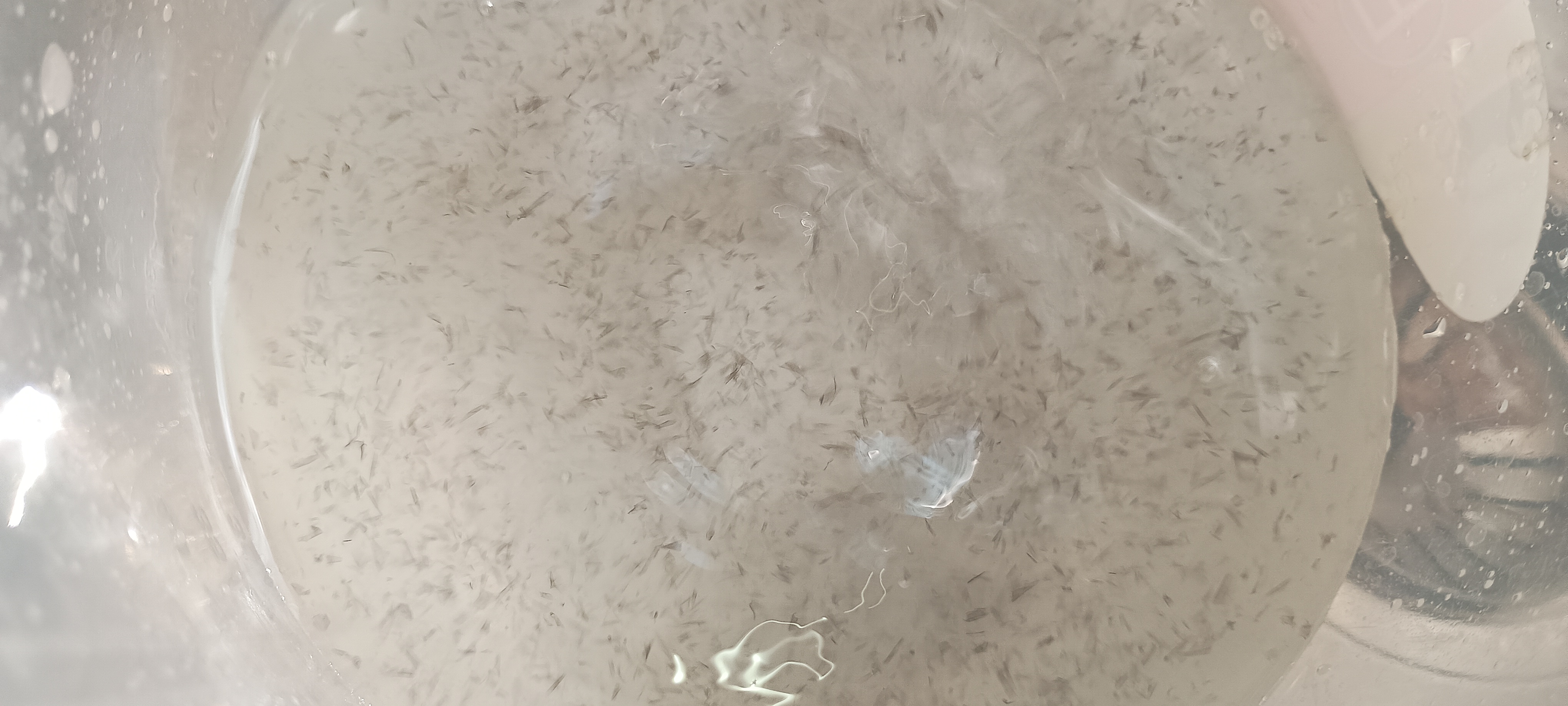
The strips of emulsion could be seen floating in the Fixer after developing was done:
The result on the finished film was evident. Not only did emulsion fall off the edge but some of it stuck back on to the film, in the image area:
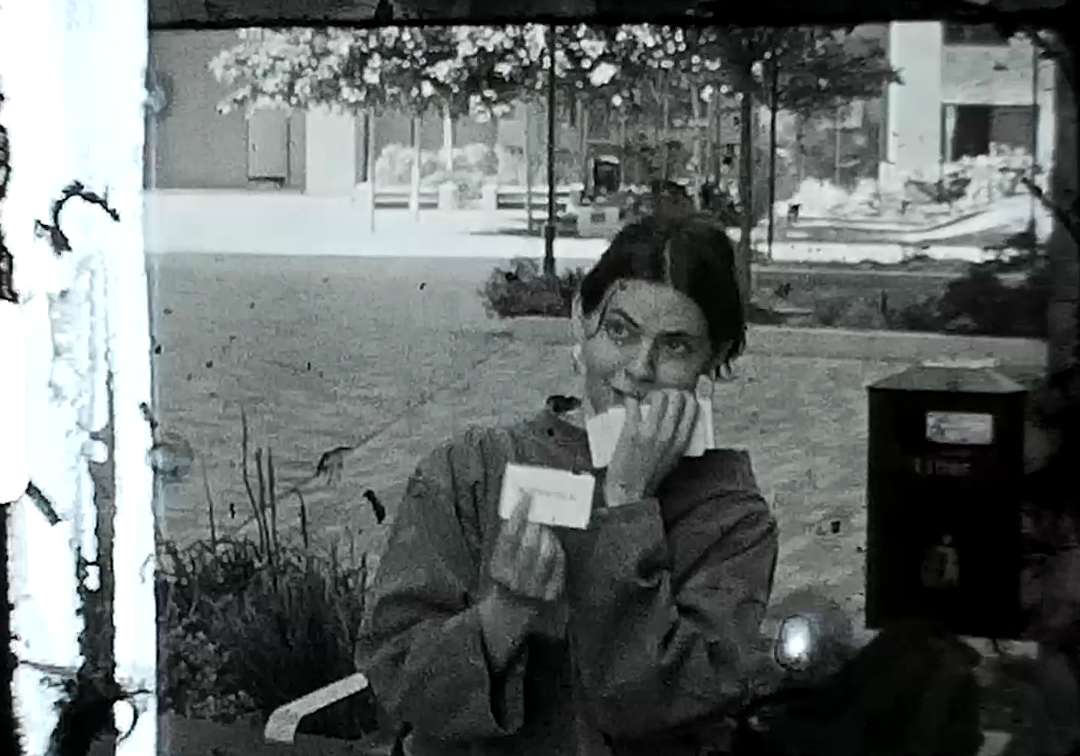
Again, I am partly to blame for this, not judging the bleach timing correctly. I’m sure on future development runs, with adjusted bleach time in the finalised version of the FRÄNK spiral, I would get better results. Improvements I suggested to Vintage Visual after testing the Prototype were:
- A funnel that attaches to the intake to help pour stuff in without spilling
- Secure clips to keep the lid attached instead of, or in addition to magnets. [Clips now part of design, as well as a top handle]
- A gauge to show how high the fluid level is (with a min/max marking)
- A hose attachment to the intake for rinsing water straight into the FRÄNK from the tap.
- A hose attachment, or better and longer ‘elbow’ pipe for draining the tank. [improvements already underway]
- Software 1: A ‘manual’ option to just rotate the spiral until you tell it to stop. [Vintage
- Visual informed me that simply pressing the start button three times will begin the spiral rotation]
- Software 2: Switching the wifi on and off via the menu was difficult. [VV said they will make it easier.]
- Software 3: The ability to enter or edit programmes via the control panel without
- using an external device. [VV said they didn’t want to make the interface too complicated]
- Adaptability with the classic 50′ LOMO plates
I am happy to say the company took on many of my suggestions and released this announcement of planned improvements:
https://vintagevisual.eu/blogs/FRÄNK-build-diary/FRÄNK-september-update
I was particularly pleased to see the heating pad option to be included on future designs and am impressed at the speed at which they are able to make design changes and create improved versions. The FRÄNK is a really interesting piece of kit, and Joonas and Arno should be applauded for bringing new hardware and new technology to the world of film development. Although I had one or two mishaps I think it has definite potential, especially to the LOMO users who shoot 16mm and are more used to threadingLOMO platters than the AGO cylinder.
If it’s possible to cleanly process a 100 foot load of 16mm all in one go, on 1L of each bath instead of 1.7L for the LOMO, then I think this is the most attractive feature of the FRÄNK. As always, economy wins!